
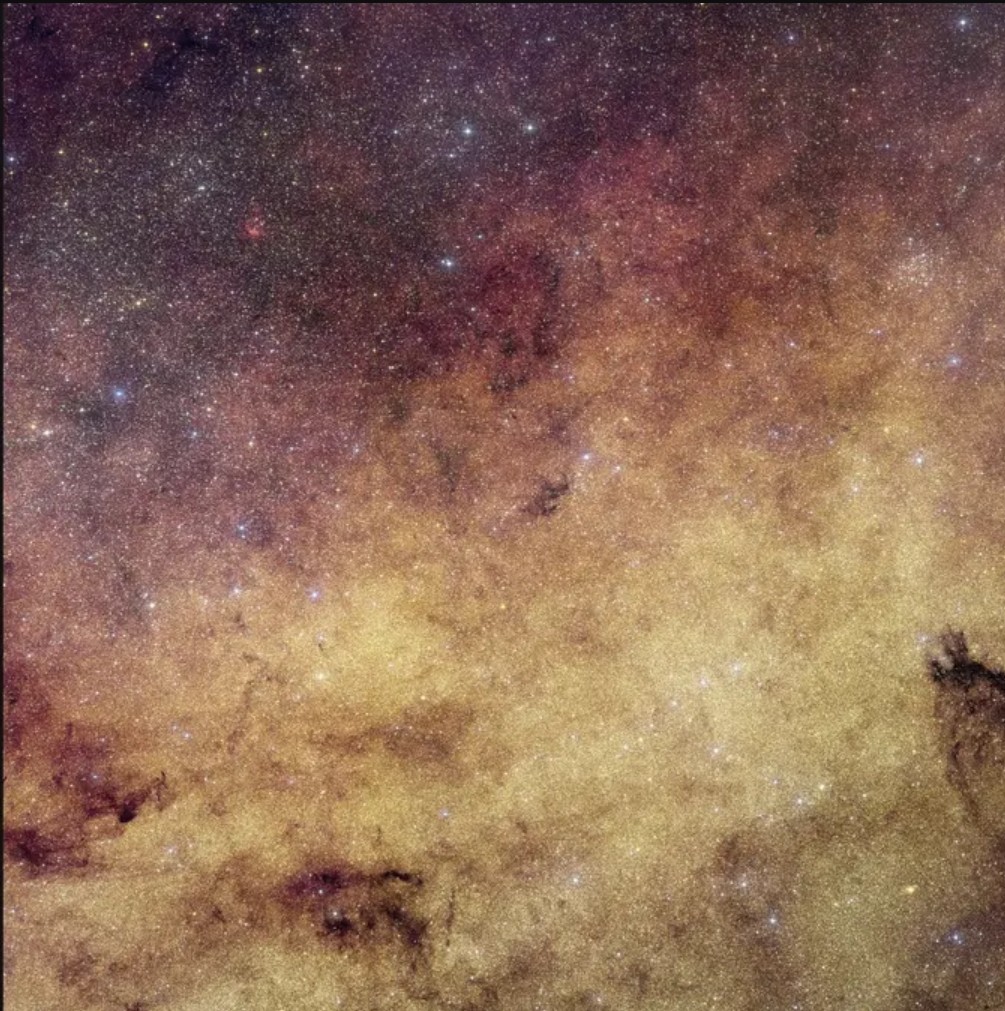
If you love gazing at the night sky and wondering what lies within the dense, glowing band of our home galaxy, you are in for a treat. The European Space Agency (ESA) has just released the largest, most detailed visible-light image of the Milky Way’s center ever created.
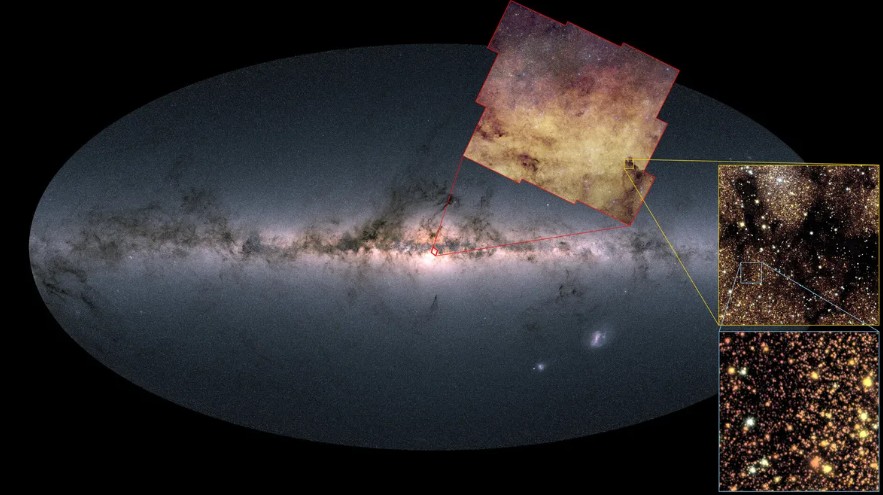
Captured by the Euclid space telescope, this monumental snapshot features a staggering 60 million individual stars and includes 51 known exoplanet systems. But this isn’t just a beautiful picture to use as your next desktop wallpaper—it is a groundbreaking tool that is going to revolutionize how we hunt for hidden worlds in our galactic neighborhood.
Here is everything you need to know about this incredible astronomical milestone.
Staring into the Galactic Bulge
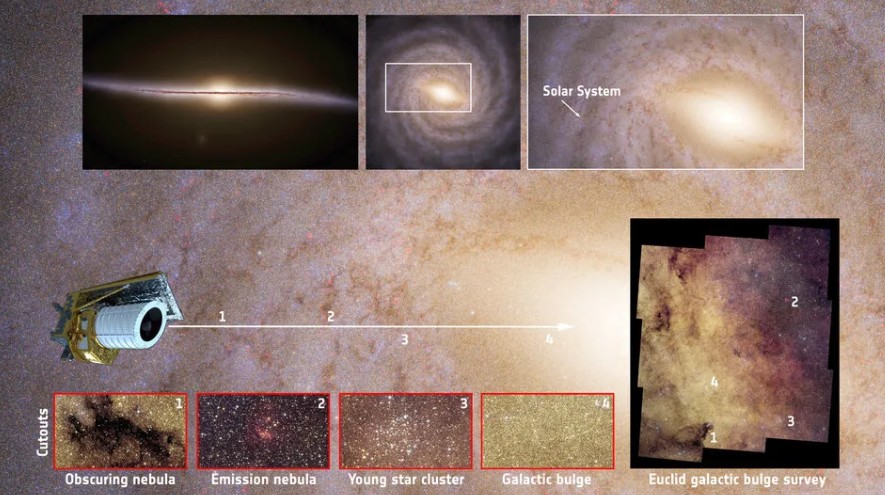
To create this masterpiece, Euclid turned its highly sensitive gaze toward the heart of our galaxy, a densely packed region known as the “galactic bulge.” What makes this achievement so remarkable is the speed and precision with which it was captured. It took Euclid just 26 hours of observation time to construct a high-resolution portrait that other telescopes would struggle to piece together.
While Euclid’s primary mission is to act as a “dark universe detective” studying distant galaxies and dark energy, its immense optical power makes it uniquely capable of resolving individual stars in the crowded center of the Milky Way. Most other telescopes simply get blinded by the sheer density of overlapping starlight in this region.
The Hunt for New Worlds Using “Microlensing”
Why go through the trouble of mapping out 60 million stars? The answer lies in the hunt for exoplanets (planets orbiting stars outside our solar system).
The galactic bulge is the ultimate hunting ground for a cosmic phenomenon known as microlensing. This weak form of gravitational lensing occurs when a foreground star passes perfectly in front of a background star. The mass of the foreground star warps the fabric of space, acting like a giant magnifying glass that bends the light of the star behind it. If the foreground star has a planet orbiting it, that planet’s gravity creates an extra, tiny “blip” in the magnified light.
Ground-based telescopes have discovered almost 300 exoplanets using this technique over the last 20 years. However, Euclid’s new high-definition map gives astronomers an unprecedented baseline. What makes microlensing so exciting is that, unlike other exoplanet-hunting methods that usually only find hot, massive planets hugging close to their stars, microlensing is fantastic at finding smaller, colder planets—like “ice giants” similar to Neptune or Uranus—orbiting deep in their star systems.
Paving the Way for the Future
Because a typical microlensing event takes about 20 days to unfold, Euclid’s 26-hour observation isn’t long enough to catch an event from start to finish. Instead, this image serves as the ultimate time capsule.
Upcoming missions, such as the Nancy Grace Roman Space Telescope, will stare at this exact region for extended periods to catch microlensing blips in action. When they do, astronomers can look back at this Euclid data as a time reference to see exactly what the individual stars looked like before they aligned. By comparing the data, scientists can accurately measure how fast the stars are moving, confirm the existence of newly discovered planets, and precisely calculate their mass.
Keep Looking Up!
At You Can See The Milky Way, we are constantly reminded of how vast, beautiful, and mysterious our galaxy is. Euclid’s new snapshot isn’t just a record of 60 million stars; it’s a treasure map of ice giants and alien worlds just waiting to be discovered.
What do you think of Euclid’s incredible new view of our galactic center? Let us know in the comments below, and as always, keep looking up!