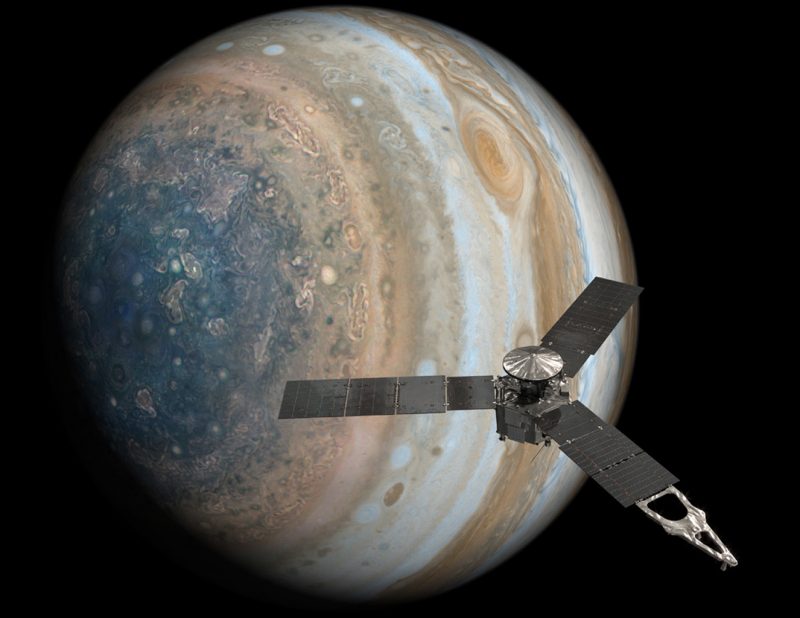
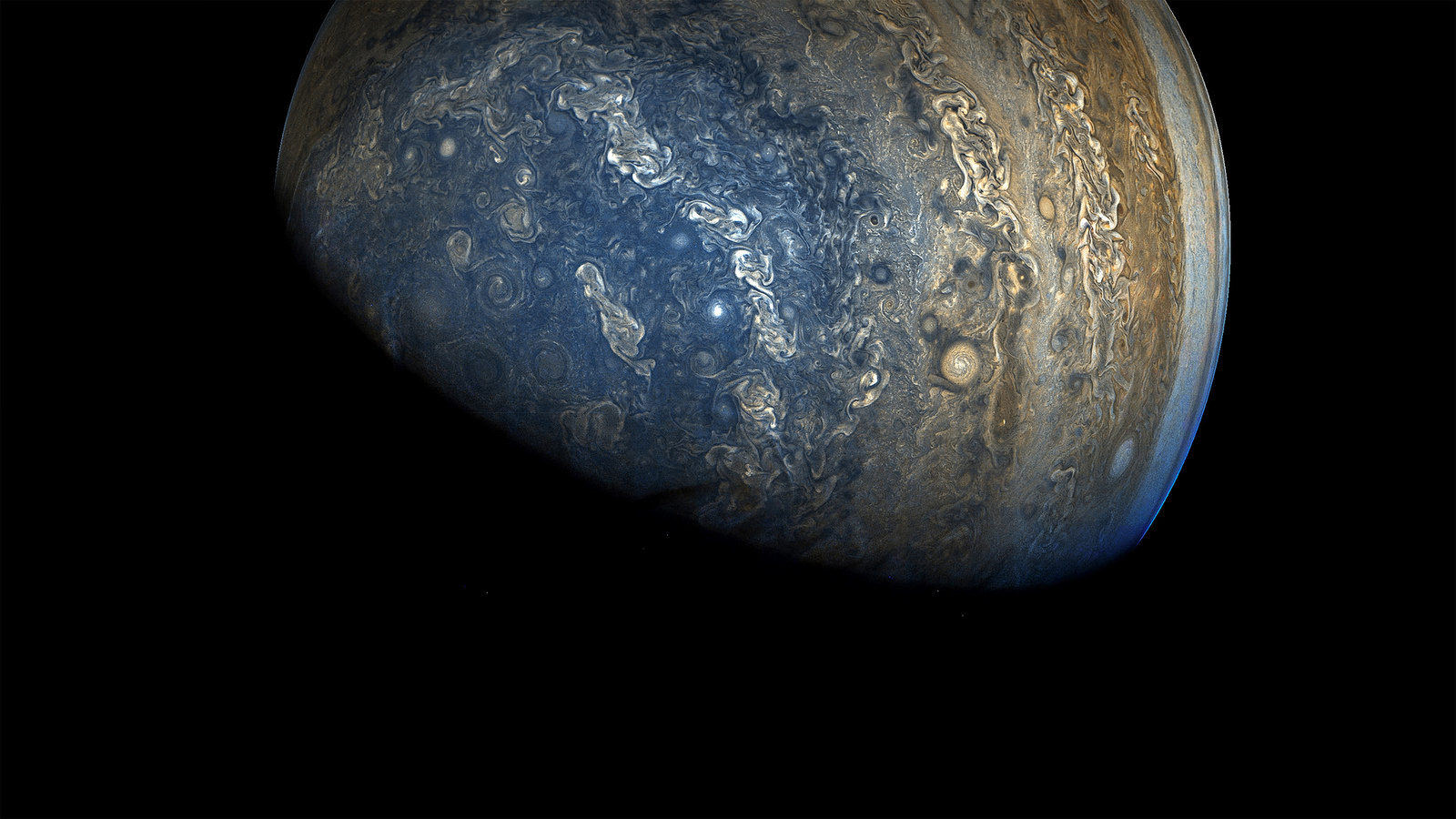
Juno, a billion dollars American Space Agency has transmitted to Earth a series of photographs of the largest planet in our solar system: Jupiter.
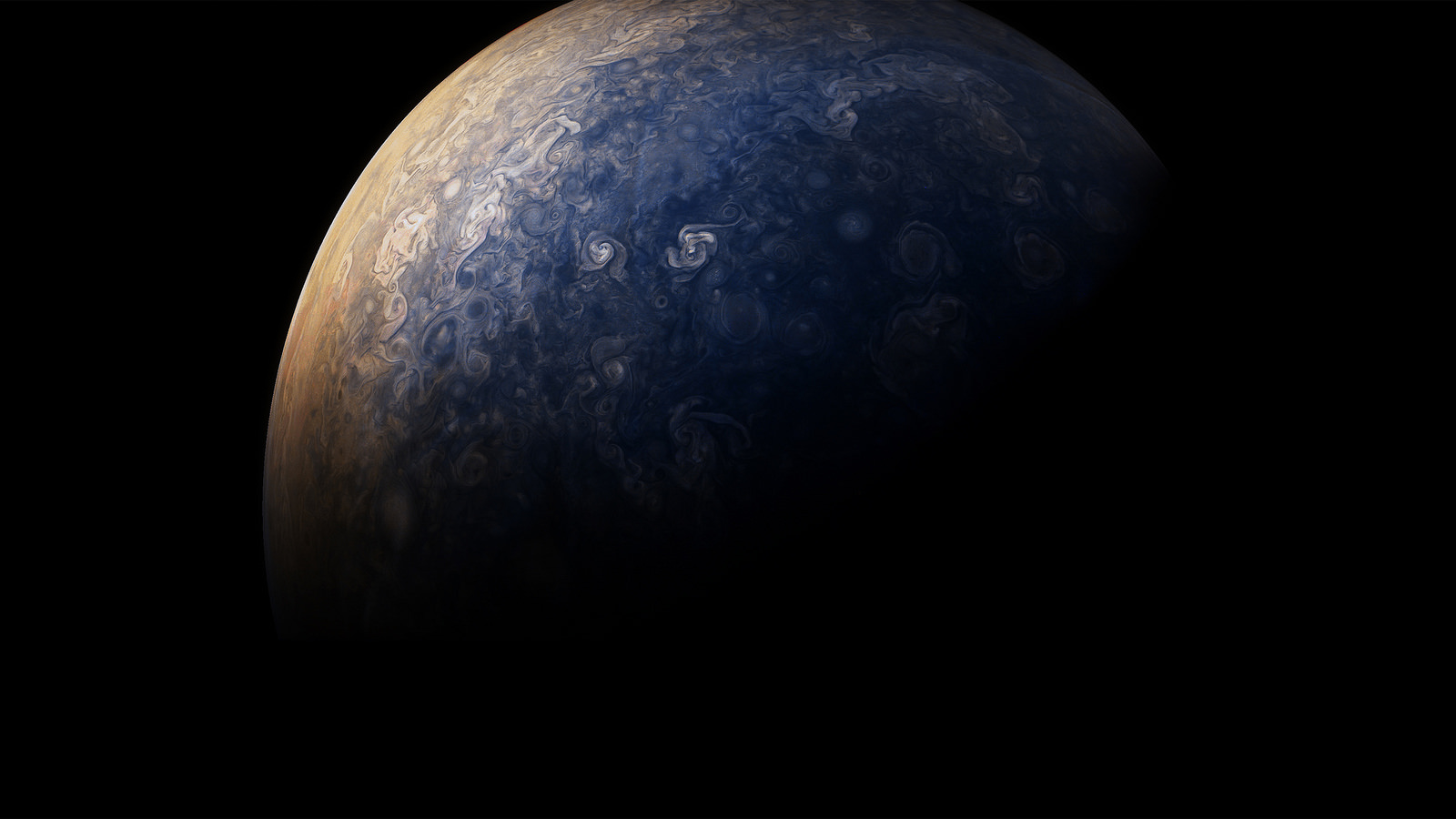
The photos were taken on October 24 at a speed of 209,214 km / h, just a few thousand kilometers away, in the ninth overflight of the planet. The images below have been published this week, and astronomy enthusiasts have crafted them to play the beauty of the planet, writes thespaceacademy.org.
The Juno probe was scheduled to orbit the largest planet in our solar system 37 times. Launched on August 5, 2011, Juno placed in orbit around Jupiter on July 4, 2016.
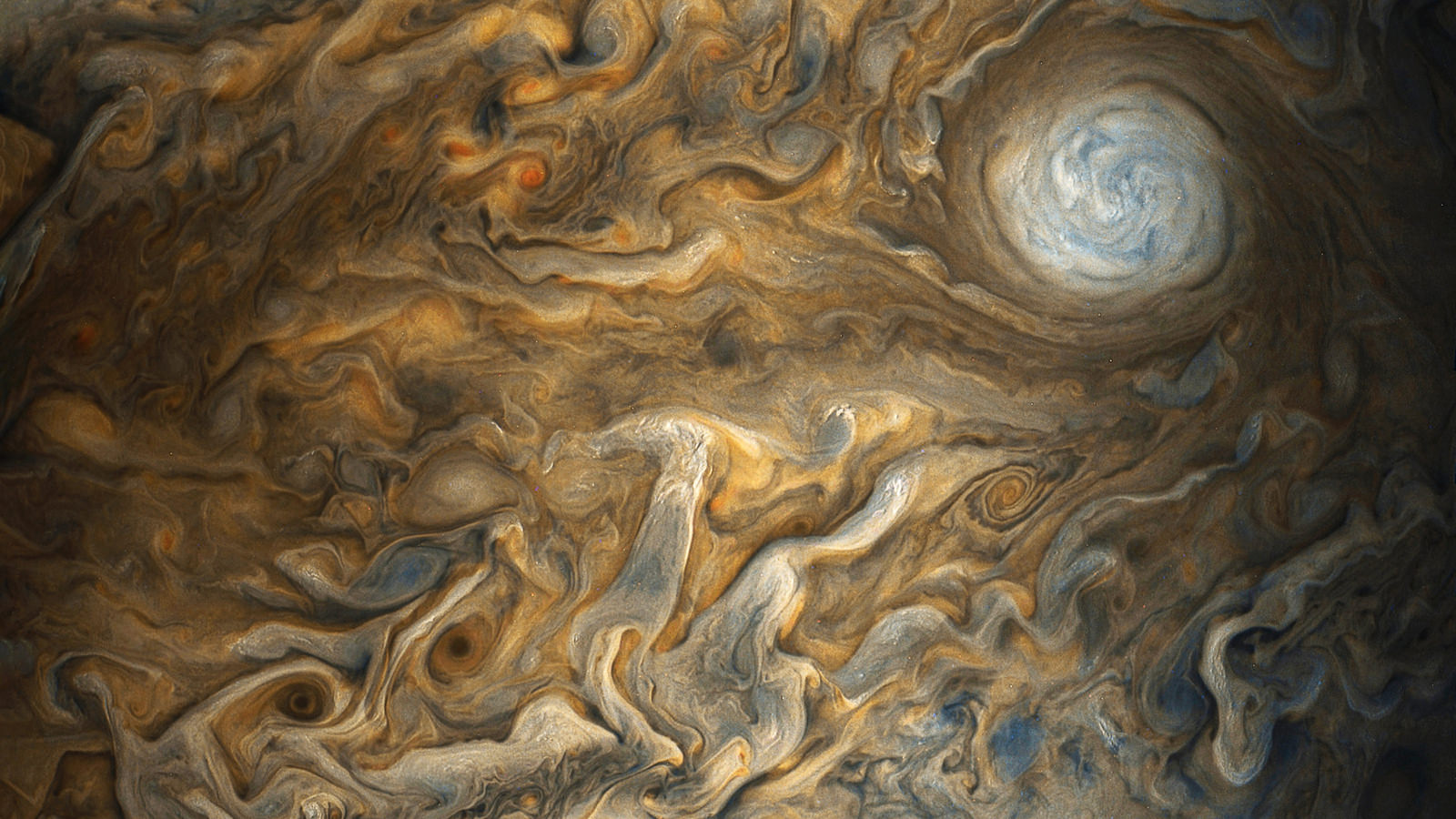
Juno’s flybys are much closer than the 43,000-kilometer-long record set by the American Pioneer 11 probe in 1974. Juno has already detected giant hurricanes in the area of the Jupiter’s poles and made unusual observations about the atmosphere inside the gaseous planet.
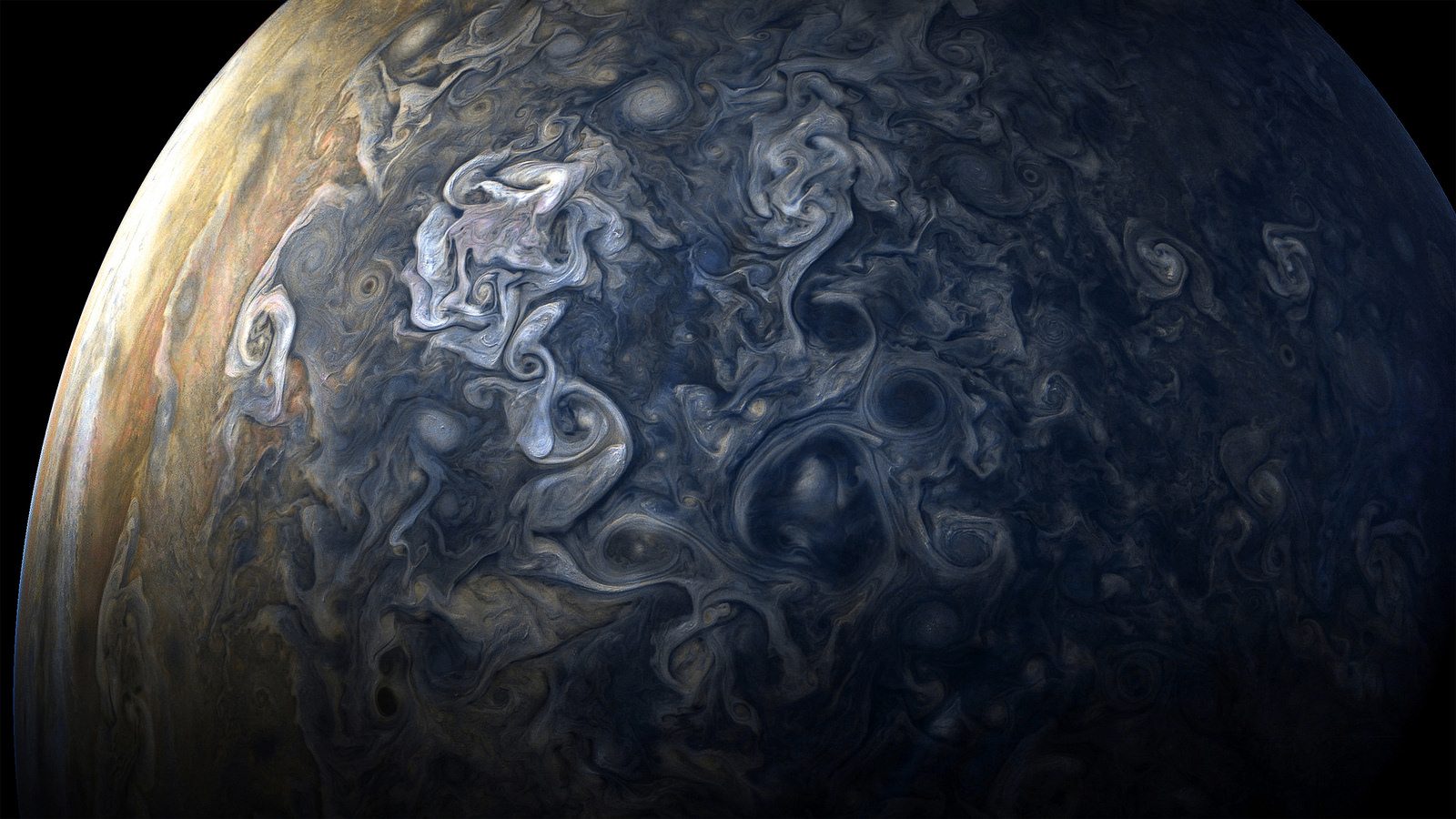

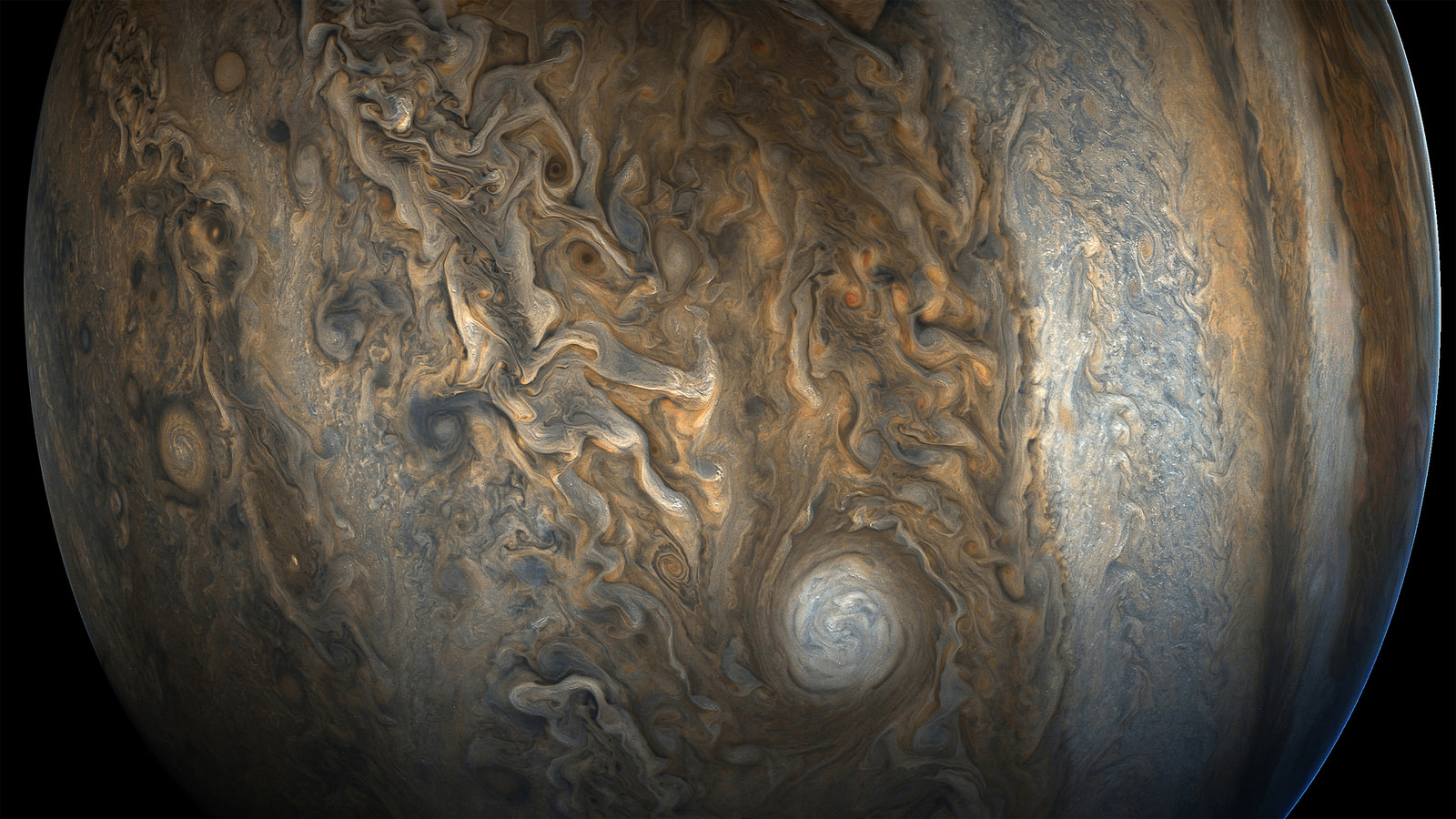
The planet is predominantly made up of hydrogen (90%) and helium (10%). Other chemical elements detected on Jupiter in small quantities are methane, ammonia, sulfur and water. The average temperature is -145 degrees Celsius (-229 degrees Fahrenheit), which depends rather on the height of the surface.
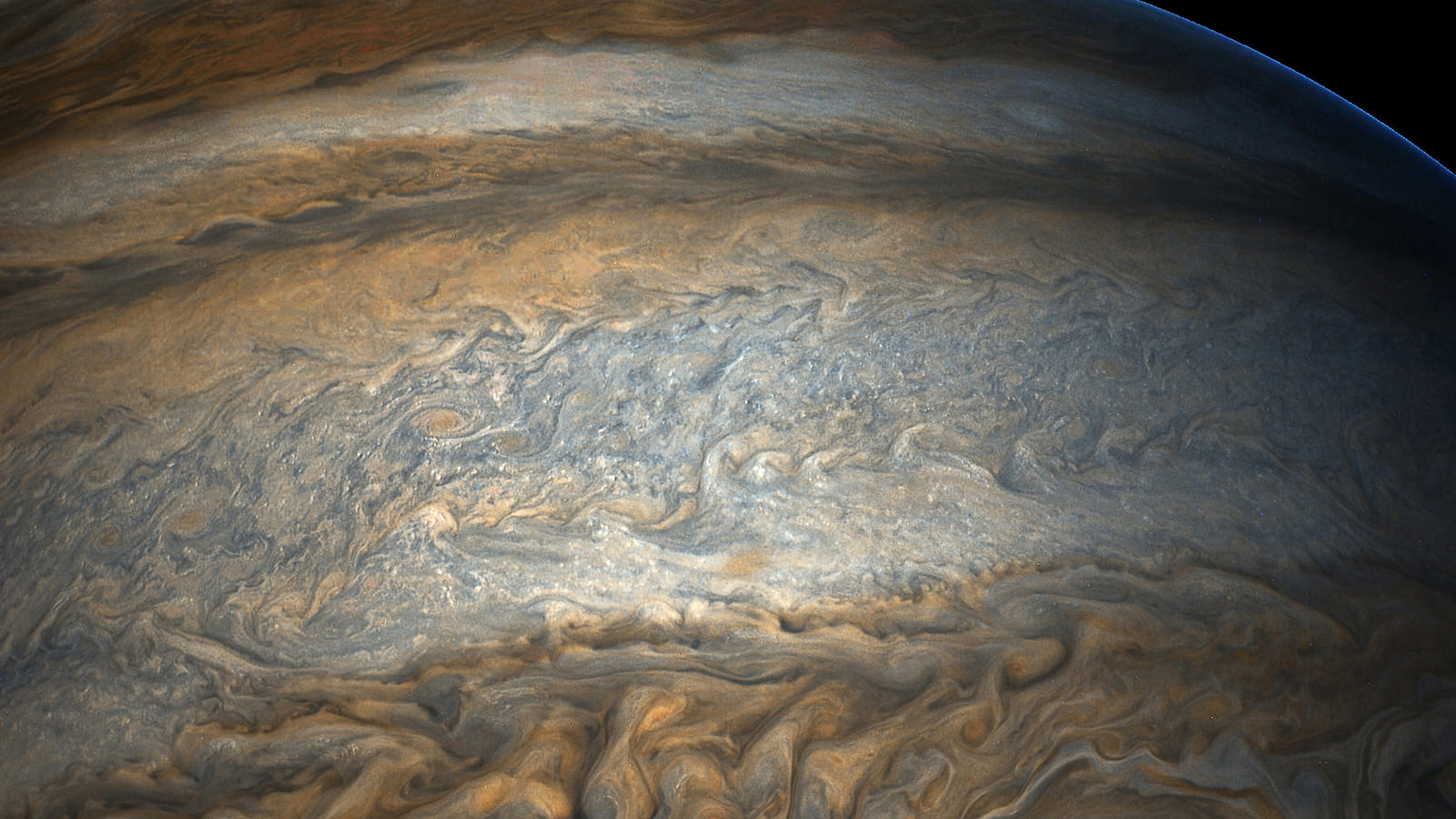
The mission will end in February 2018, when Juno will plunge through the ultra-thin layers of Jupiter’s atmosphere and transmit the latest data he gathers before being crushed by the giant atmospheric pressure.
NASA has made the decision to end this mission to ensure there is no danger of contamination of Jovian satellites containing water and microbial life, especially Europe.