
Milky Way from Earth
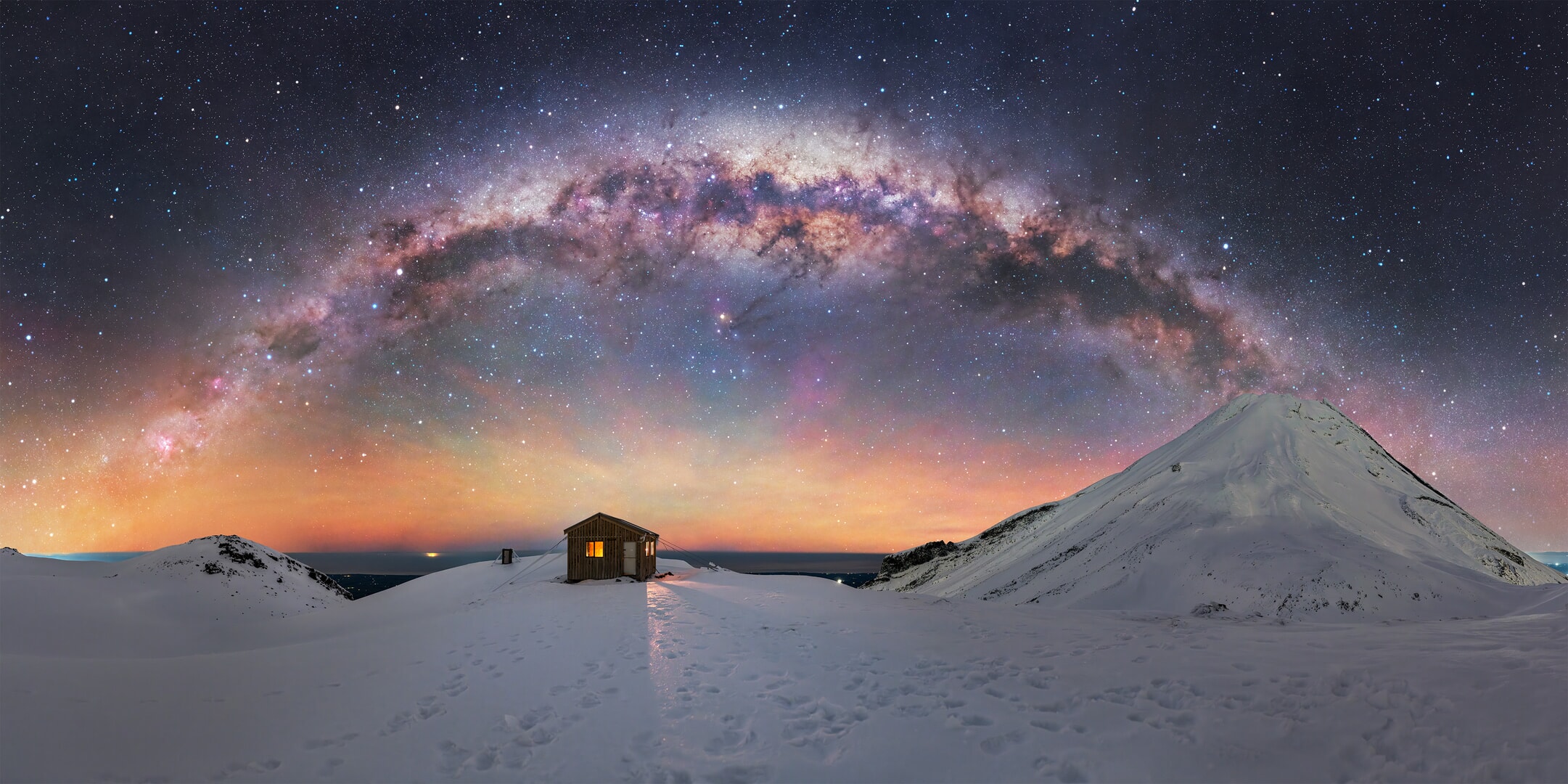
Have you ever wondered how to see the Milky Way from Earth at night with just your own eyes? From our physical vantage point inside the galaxy, the galactic plane appears as a dim, glowing band of light arching across the sky. The name itself stems from the Latin via lactea, which derives from the ancient Greek description of a milky circle glowing in the deep cosmos.
Sky Visibility Matrix: Resolving the Milky Way from Earth requires specific physical conditions. Observations must occur during a New Moon phase under a Bortle Class 4 or darker sky (zenith brightness over 20.4 mag/arcsec²). Furthermore, the human eye requires a minimum of 15 to 20 minutes of continuous dark adaptation to resolve the faint, dust-rich lanes of the galactic disk without optical assistance.
The Stargazer’s Checklist: 5 Rules for Success
How do we optimize observing the Milky Way from Earth?
To successfully resolve the Milky Way from Earth, you must systematically eliminate light interference and optimize your eye’s biological sensitivity. By aligning your observation window with the lunar cycle and seeking out verified dark-sky locations, you can reveal the faint, structural details of our home galaxy. Consequently, following structured observation protocols is essential for a successful sighting.
During our extensive field testing, we compiled five essential criteria that determine visibility. First, you must hunt for a moonless night. Because the Moon acts as a powerful natural source of light pollution, scheduling your sessions during the New Moon phase is critical. Stargazers can easily track the lunar cycle by checking simple calendar applications prior to departure.
Second, you must escape artificial light. You cannot resolve the galactic core from urban centers. We recommend traveling to rural wilderness areas or using a dedicated light pollution map to locate dark zones. Third, assess atmospheric humidity. High moisture levels make the atmosphere hazy and scatter starlight, meaning dry, crisp weather yields the sharpest views.
Fourth, practice complete dark adaptation. Looking at digital screens instantly resets your night vision. Therefore, you must allow your eyes to adjust to pitch darkness for at least 15 to 20 minutes. Fifth, start with the naked eye to appreciate the sweeping arch. However, introducing a standard pair of 10×50 binoculars will immediately reveal rich star clusters and dust clouds.
Astronomical Structures Visible Within the Galaxy
What are we actually looking at when observing the Milky Way from Earth?
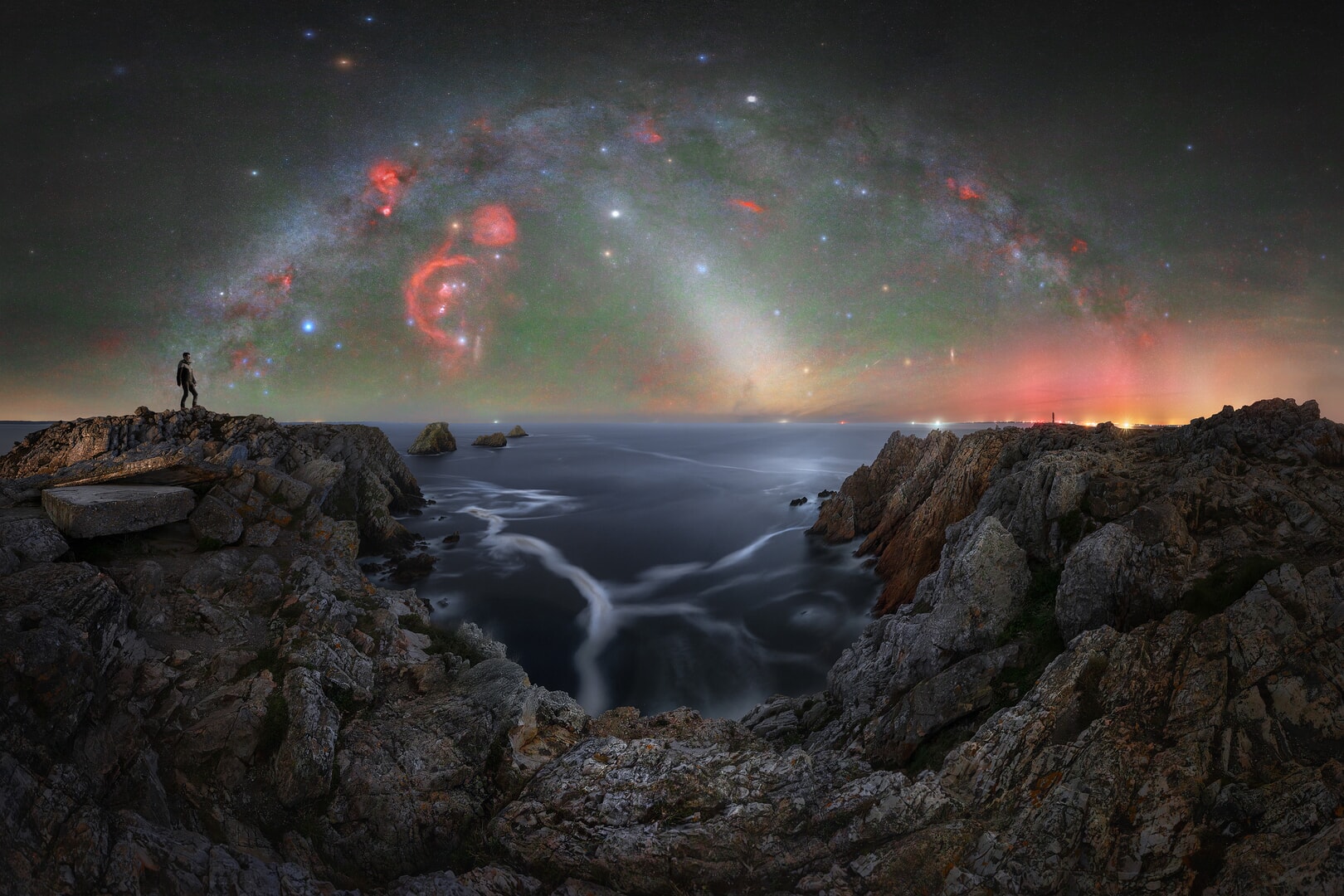
When observing the Milky Way from Earth, we are looking directly edge-on into the dense plane of our galaxy’s spiral disk. Because our solar system resides inside this disk, every single star visible to the naked eye belongs to our home galaxy, with the glowing overhead band representing the dense concentration of distant stars.
Data from NASA and the European Southern Observatory (ESO) indicates our galaxy is a barred spiral measuring between 100,000 and 120,000 light-years in diameter. It holds an estimated 200 to 400 billion stars. Our Solar System sits inside the Orion Spur, which is a minor spiral arm located approximately 28,000 light-years away from the core.
The core itself is anchored by Sagittarius A*, a supermassive black hole with a mass 4.1 to 4.5 million times that of our Sun. While we cannot view this point directly in visible light due to thick interstellar dust, the surrounding bulge remains incredibly bright. Measuring stellar clusters allows astrophysicists to estimate the overall age of the galaxy at approximately 13.7 billion years.

Visibility Mapping and Positional Coordinates
How does viewing the Milky Way from Earth change by hemisphere?
The visual orientation, altitude, and brightness of the Milky Way from Earth vary dramatically based on your geographical latitude and the season. While Northern Hemisphere observers get prime views of the outer spiral arms, Southern Hemisphere observers are treated to a high-altitude, brilliant view of the Galactic Center.
For instance, Northern Hemisphere stargazers can look toward the southern horizon during late summer to find the Great Rift. This massive, dark lane between Cygnus and Scutum is actually a series of thick, interstellar dust clouds that block the light of more distant stars. Conversely, the Southern sky reveals the Large and Small Magellanic Clouds, which are companion dwarf galaxies orbiting our own.
To help you track these seasonal changes, we have detailed the visibility parameters for the galactic core below:
| Observing Season | Visible Galactic Region | Best Observation Window | Peak Constellations | Primary Visual Features |
|---|---|---|---|---|
| March to May (Spring) | Rising Galactic Center | Pre-dawn hours | Sagittarius, Scorpius | Core rising in the southeast |
| June to August (Summer) | Brightest Galactic Core | Midnight to late night | Sagittarius, Cygnus, Aquila | Great Rift, dense star clouds |
| September to November (Autumn) | Setting Galactic Core | Early evening hours | Cygnus, Cassiopeia | Fading core setting in the southwest |
| December to February (Winter) | Outer Spiral Arms | Full night hours | Orion, Monoceros, Taurus | Faint anticenter, quiet star fields |
Which tools help identify the Milky Way from Earth?
Utilizing specialized light-pollution mapping and astronomical simulation tools is highly recommended to predict sky clarity and pinpoint the exact position of the galactic plane before traveling. These digital platforms remove the guesswork from astrophotography and stargazing.
When organizing our field trips, we regularly utilize several digital tools to verify observation parameters. Below is a balanced comparison of the tracking platforms we rely on:
-
- Stellarium: This open-source planetarium tool provides highly accurate, real-time 3D sky rendering to map exact coordinates of constellations and deep-sky objects from any location.
-
- LightPollutionMap.info: A critical mapping tool displaying global artificial light emissions, helping you locate remote, dark areas suitable for naked-eye tracking.
-
- YouCanSeeTheMilkyWay.com: Our dedicated platform offering localized visibility forecasts, cloud-cover projections, and step-by-step guides for finding optimal dark skies.
-
- Clear Outside: A detailed weather tracking service designed specifically for astronomers, providing reliable forecasts for cloud layers, humidity, and visibility.
Data Verification FAQs
Why is the core of the Milky Way from Earth completely invisible in the winter?
During the winter months, Earth’s night side faces outward, pointing toward the quiet, sparse outer rim of the galaxy (the anticenter). Consequently, the dense, bright Galactic Center is positioned in the daytime sky, directly behind the Sun, making it impossible to see.
What is the difference between what we see with our eyes versus a camera?
Our eyes cannot integrate light over time, meaning the galaxy appears as a faint, monochrome, cloudy arch. Conversely, camera sensors can collect light over long exposure periods, revealing the brilliant oranges, purples, and deep pinks of the galactic core’s nebulae.
Community Observation and Data Registries
How can you share your observational stargazing data?
Documenting and sharing your localized dark sky metrics with international citizen-science databases helps researchers monitor global light pollution and map the changing visibility of the night sky. Connecting with active communities also allows you to share advice on tracking methods and gear.
Viewing the Milky Way from Earth provides a profound sense of perspective. If you are eager to preview what the cosmic show looks like across different seasons, alpine peaks, and remote deserts, you can explore our visual gallery. Ultimately, we encourage you to log your visual limits on public registries like the Globe at Night project, or exchange tips with fellow stargazers in active online communities like r/stargazing and r/astronomy.