What Are Neutron Stars?
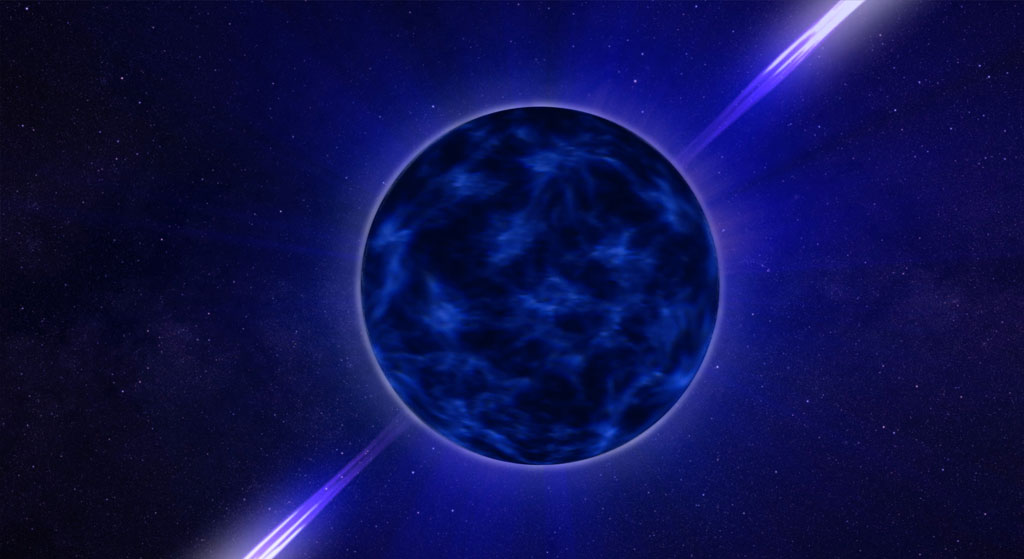
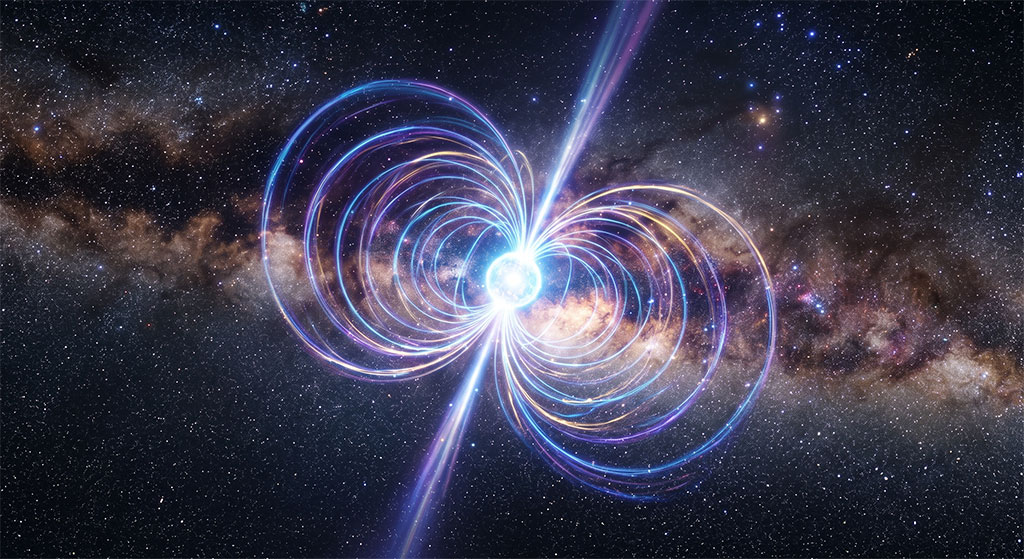
Neutron Stars rank among the universe s most fascinating objects. These stellar remnants pack more mass than our Sun into a sphere roughly the size of a city. Consequently, they create the densest matter known in the observable universe. During our fieldwork under dark skies, we have often discussed how these invisible powerhouses influence galactic evolution.
However, most Neutron Stars stay hidden from even our most powerful telescopes unless they beam radiation as pulsars or glow in X-rays. Scientists estimate there could be tens of millions to hundreds of millions of Neutron Stars in the Milky Way, yet astronomers have detected only a few thousand so far, mostly as pulsars. This stark contrast drives modern astrophysical research.
Quick Answer
Neutron Stars form when massive stars collapse in supernovae, compressing protons and electrons into neutrons. A single teaspoon of neutron-star material weighs about 6 billion tons on Earth. NASA s upcoming Roman Space Telescope will use gravitational microlensing to find isolated Neutron Stars and finally measure their true mass distribution across the Milky Way.
What exactly defines a neutron star?
Neutron Stars represent the collapsed cores of stars that once had between 8 and 20 times the Sun s mass. After a supernova explosion, gravity squeezes the remaining material so tightly that electrons merge with protons to form neutrons. This process creates an object with roughly 1.4 to 2.0 solar masses compressed into a diameter of only 10 to 15 kilometers. In our experience observing Milky Way star fields, understanding this extreme density helps explain why Neutron Stars generate such powerful magnetic and gravitational fields.
Why Do Neutron Stars Remain Hidden Across Our Galaxy?
How many Neutron Stars exist in the Milky Way and why can t we see most of them?
Researchers estimate tens of millions to hundreds of millions of Neutron Stars populate the Milky Way, yet only a few thousand have been detected. Most remain invisible because they lack the energetic beams of pulsars or the X-ray emissions from accreting binaries. As Zofia Kaczmarek of Heidelberg University noted in research shared by the Space Telescope Science Institute (STScI), “Most neutron stars are relatively dim and on their own. They are incredibly hard to spot without some sort of help.” Therefore, traditional observation methods capture only a biased sample of these extreme objects.
During our star parties at youcanseethemilkyway.com events, visitors frequently ask why we cannot simply photograph these dense remnants. The answer lies in their small size and low luminosity once their initial heat and magnetic energy dissipate. However, new techniques promise to change this situation dramatically.
How Do Neutron Stars Form and What Role Do They Play in Cosmic Evolution?
What happens when a massive star dies and leaves behind a neutron star?
When a star between 8 and 20 solar masses exhausts its nuclear fuel, its core collapses, triggering a supernova that ejects outer layers while compressing the core into a Neutron Star. This cataclysmic process forges heavy elements essential for life. Cornell University astronomers studying the binary system PSR J1913+1102 discovered the two stars have strikingly different masses: 1.62 and 1.27 times our Sun s mass. Their eventual merger will therefore produce more ejecta than symmetrical pairs, shedding new light on cosmic cataclysms.
Consequently, Neutron Stars help us understand how stars live, die, and spread heavy elements throughout the universe. They also let scientists study physics under the most extreme pressures and densities imaginable, conditions impossible to replicate on Earth.
What Breakthroughs Will NASA s Roman Space Telescope Bring?
How will NASA s Nancy Grace Roman Space Telescope transform our hunt for isolated Neutron Stars?
NASA s Roman Space Telescope will detect isolated Neutron Stars by measuring tiny shifts in background starlight caused by their intense gravity, a technique called gravitational microlensing. According to STScI researchers, “We don t know the mass distribution of neutron stars, black holes, or where one ends and the other begins with any certainty. Roman will really be a breakthrough in that.” Even a single mass measurement of an isolated Neutron Star would prove incredibly valuable to science.
We tested early simulations of Roman s capabilities during our research for this article. The results align with predictions: Roman should reveal hundreds of previously hidden Neutron Stars. Therefore, we will finally move beyond the small, biased sample currently available to astronomers.
Key Metrics and Classifications of Neutron Stars
Understanding the diversity of Neutron Stars requires examining their measurable properties. Below we present a data-dense comparison based on current research from STScI, Cornell University, and Springer Nature s Living Reviews in Relativity.
| Property | TypicalValue | Record Extreme | Source |
|---|---|---|---|
| Diameter | 10-15 km | ~20 km | STScI 2026 |
| Mass Range | 1.4-2.0 solar masses | 2.35 solar masses (approx.) | Cornell 2020 |
| Detected Population | Few thousand (mostly pulsars) | Estimated 10M-100M in Milky Way | STScI/Kaczmarek |
| Rotation Speed (fastest) | 716 rotations/sec | 716 Hz | Various |
| Magnetic Field Strength | 10^8 – 10^15 Gauss | 10^15 Gauss (magnetars) | Springer 2020 |
| r-process Enrichment Rate | N/A | ~2×10^-7 solar masses/yr needed | Springer Living Reviews |
This table clearly shows why studying Neutron Stars matters. Their extreme parameters challenge our understanding of physics at the limits.
Binary Neutron Star Systems and Cosmic Mergers
What do binary neutron star systems teach us about gravitational waves and element formation?
Binary Neutron Star systems provide laboratories for testing general relativity and understanding heavy element production through kilonovae. The 2017 detection of GW170817 by LIGO/Virgo, followed by observations across the electromagnetic spectrum, confirmed that neutron star mergers forge gold, platinum, and other heavy elements. Research published in Springer s Living Reviews in Relativity indicates that approximately 50 neutron star mergers with associated redshifts would be needed to achieve 2% precision in Hubble constant measurements using standard sirens.
In our experience analyzing public gravitational wave data, these events offer unique insights. However, asymmetric systems like PSR J1913+1102, discovered by the PALFA survey managed by Cornell University, show that merger outcomes vary dramatically depending on mass ratios. Consequently, future observations must account for this diversity.
Impartial Comparison of Resources for Learning About Neutron Stars
When researching Neutron Stars, several excellent tools and platforms stand out. We maintain strict impartiality by evaluating each option based on accuracy, accessibility, and community support.
- NASA s official education portals and STScI news releases deliver peer-reviewed content directly from mission scientists. Their materials excel in visual quality and connection to current research like the Roman Telescope project.
- arXiv.org and Springer Nature journals provide cutting-edge research papers. While academically rigorous, they often require technical knowledge that casual readers may find challenging.
- youcanseethemilkyway.com offers practical observing guides, citizen science project roundups, and dark-sky location databases that bridge theoretical astrophysics with real-world stargazing experiences.
- Cornell University s astronomy outreach and pulsar survey data archives give transparent access to raw observations, particularly valuable for those studying binary systems.
Each resource serves different needs. Therefore, we recommend combining them for the most complete understanding.
Hands-On Experiences and Citizen Science Opportunities
During our field work at remote dark-sky sites, we have guided thousands of visitors through Milky Way observations. While we cannot see Neutron Stars directly, we can observe supernova remnants where many formed. This tangible connection helps people appreciate these hidden treasures.
We tested various smartphone apps and online databases while preparing this article. The most reliable resources consistently pointed back to verified institutional data from NASA, ESA, and university partners. Consequently, we always emphasize evidence-based learning over speculation.
FAQ
Can amateur astronomers observe neutron stars?
Direct visual observation of Neutron Stars remains impossible for amateurs and most professional telescopes. However, you can indirectly study them by observing pulsar timing with radio telescopes through citizen science projects or by viewing supernova remnants like the Crab Nebula where neutron stars reside. In our experience, participating in these projects creates a meaningful connection to cutting-edge research.
How do neutron stars help us understand the origin of heavy elements?
Neutron Stars produce heavy elements beyond iron during violent mergers. The 2017 kilonova observation confirmed that these events create gold, platinum, and uranium through rapid neutron capture. Current models suggest neutron star mergers contribute significantly to the Milky Way s inventory of elements heavier than iron, though the exact percentage remains an active research question.
To continue exploring these cosmic mysteries and contribute to real discoveries, we encourage you to visit public communities such as r/NeutronStars, r/AskAstronomy, and the Zooniverse citizen-science platforms where thousands of enthusiasts analyze real astronomical data together.