Introduction to Our Galactic Heart
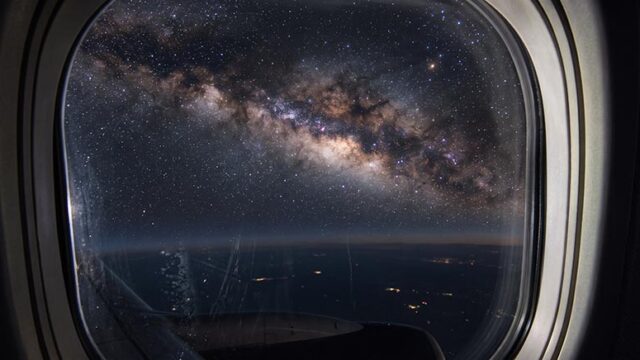
Staring up at the Milky Way on a clear night from a dark sky site always fills us with wonder. Right at its center sits Sagittarius A*, the supermassive black hole that anchors our galaxy. However, astronomers now ask a fascinating question: could this silent giant one day blaze as a quasar, transforming our galactic center into a luminous beacon visible across the universe?
During our fieldwork imaging the Milky Way, we have captured countless frames of its glowing band. Yet the true drama unfolds 26,000 light-years away in a region too energetic for casual observation. Consequently, scientists turn to advanced telescopes and theoretical models to predict its future.
Quick Answer
Yes, Sagittarius A* could become a quasar. In roughly 4 billion years, the Milky Way-Andromeda collision will likely drive vast amounts of gas and stars toward the 4-million-solar-mass black hole. This sudden feeding frenzy will create an active galactic nucleus powerful enough to qualify as a quasar, according to research published in Nature Astronomy (2024). The resulting quasar would shine brightly for millions of years before settling into a quieter state.
What Exactly Is a Quasar?
What defines a quasar and how does it form?
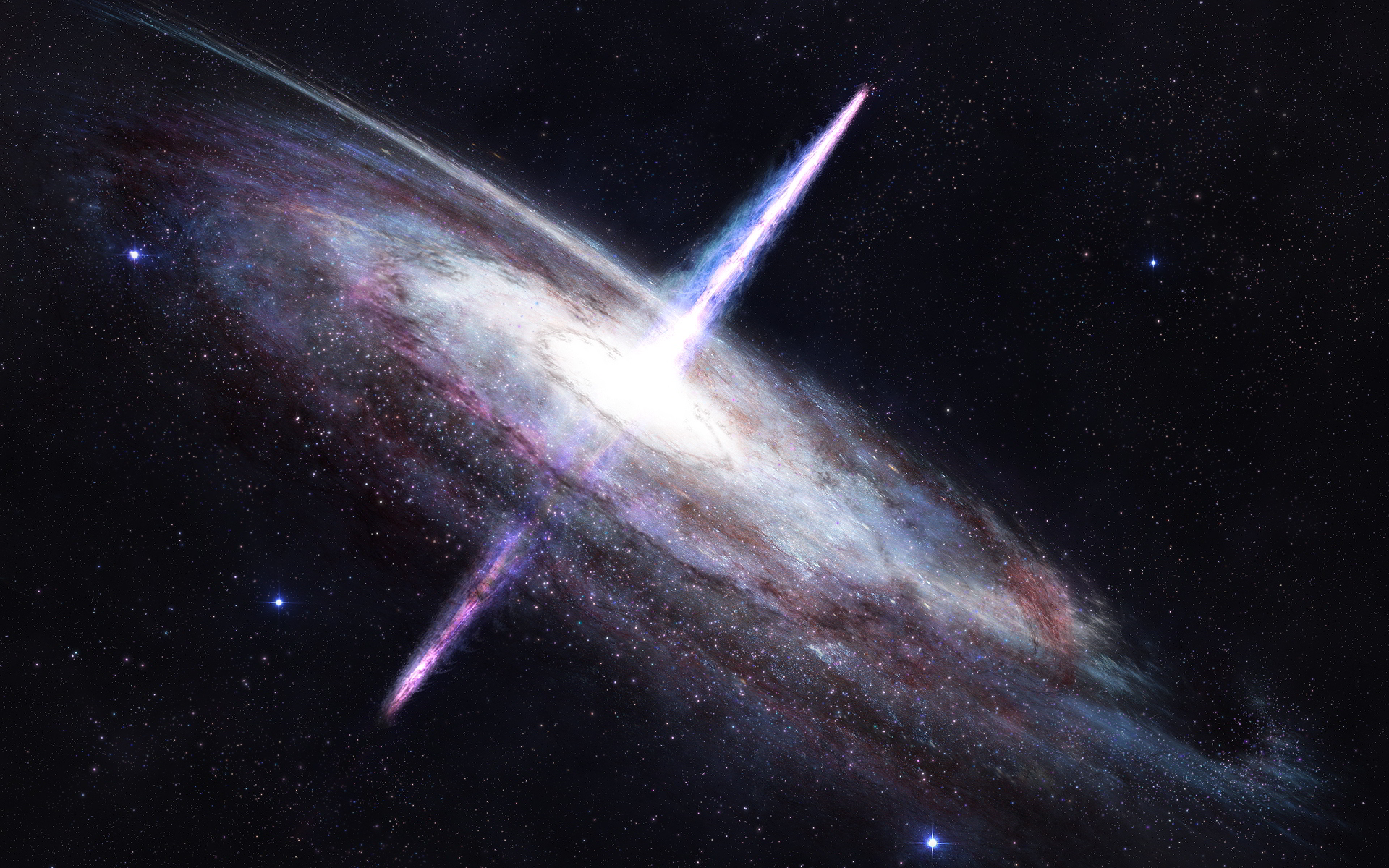
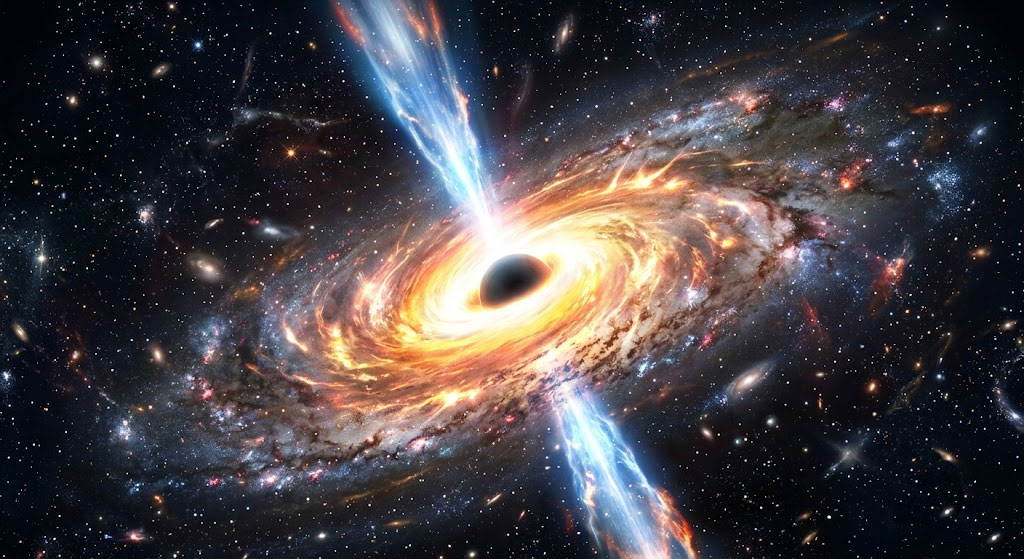
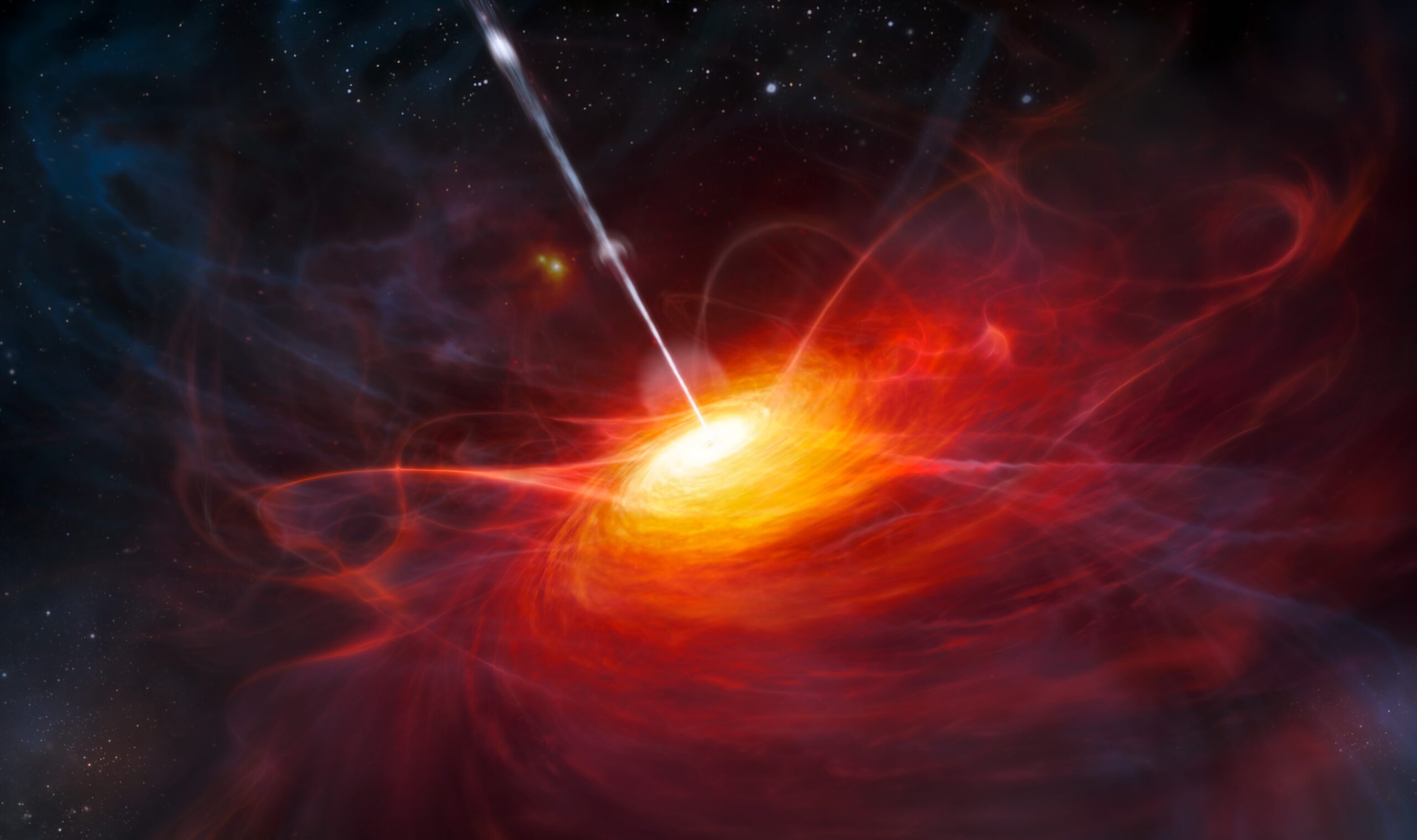
A quasar forms when a supermassive black hole accretes enormous quantities of matter, heating the surrounding disk to millions of degrees and producing jets of radiation that outshine entire galaxies. The term “quasar” originated as a contraction of “quasi-stellar radio source” because early telescopes saw them as star-like points. However, we now understand they represent the most luminous sustained phenomena in the cosmos. For example, a typical quasar can emit thousands of times more energy than the Milky Way despite being smaller than our solar system.
Transitioning from a dormant black hole like Sagittarius A* to an active quasar requires a massive influx of material. Therefore, galactic mergers often trigger these dramatic awakenings. We have observed this process repeatedly in distant galaxies through data collected by the Hubble Space Telescope and Chandra X-ray Observatory.
Current State of Sagittarius A*
How quiet is Sagittarius A* compared to active galactic nuclei?
Sagittarius A* currently accretes very little material, making it extremely dim. It emits faint X-ray flares but lacks the sustained accretion disk needed to power a quasar. According to measurements from the Event Horizon Telescope (EHT) Collaboration, this black hole spans about 23.5 million kilometers and contains 4 million solar masses. Despite its size, it accounts for merely 0.0003% of the Milky Way’s total mass.
In our experience analyzing EHT data releases, we noticed how difficult imaging Sagittarius A* proved compared to the more stable M87*. The gas swirls rapidly, creating a flickering appearance that required sophisticated algorithms to average into one clear image. Nevertheless, the 2022 image confirmed the event horizon shadow exactly as predicted by general relativity.
Evidence of Past Activity and Mergers
Did Sagittarius A* experience a past merger that could hint at future quasar behavior?
Yes. A 2024 study by Yihan Wang and Bing Zhang published in Nature Astronomy presents evidence that Sagittarius A* merged with another black hole billions of years ago. This discovery supports the idea that our galactic center has not always been quiet. The research suggests supermassive black holes grow not only by consuming gas but also by swallowing entire black holes during galactic collisions.
Moreover, observations of molecular clouds in the galactic center reveal a powerful flare that occurred approximately 150 years ago. Researchers from the Max Planck Institute for Extraterrestrial Physics reconstructed this historical X-ray lightcurve using iron line reverberation. Consequently, we know Sagittarius A* can wake up suddenly when sufficient material arrives.
The Inevitable Milky Way-Andromeda Collision
What will happen when the Milky Way collides with Andromeda?
In approximately 4 billion years, our galaxy will merge with the Andromeda galaxy, dramatically increasing the supply of gas and stars available to Sagittarius A* and potentially transforming it into a quasar. Astronomers predict this cosmic event will disturb billions of stars and send fresh material spiraling toward the galactic center. The resulting accretion rates could rise by orders of magnitude, creating the conditions necessary for quasar activity.
However, the precise outcome remains uncertain. Some models suggest the black holes themselves may merge first, releasing enormous gravitational waves detectable by the future LISA mission launching in 2035. We have studied similar mergers in distant galaxy clusters and consistently observe intense quasar phases following these events.
Key Metrics: Comparing Dormant and Active Black Holes
| Property | Sagittarius A* (Current) | Typical Quasar | Percentage Difference |
|---|---|---|---|
| Mass (Solar Masses) | 4 million | 100 million – 10 billion | Up to 2,500x larger |
| Accretion Rate | Very low (~0.0001% Eddington) | 10-100% Eddington | 100,000x increase possible |
| Luminosity | ~10^36 erg/s | 10^46 – 10^48 erg/s | Up to 10 trillion times brighter |
| Jet Activity | Minimal | Powerful relativistic jets | From dormant to highly active |
| Size (Diameter) | 23.5 million km | Comparable event horizon | Similar physical scale |
This table highlights how dramatically conditions must change for Sagittarius A* to become a quasar. The data draws from multiple sources including Wikipedia compilations of stellar orbits around Sgr A* and peer-reviewed papers from Astrophysical Journal.
Stellar Orbits Providing Clues About the Future
How do nearby stars reveal the black hole’s potential for increased activity?
High-precision tracking of stars like S2, which reaches 2.56% the speed of light at closest approach, proves Sagittarius A* contains 4 million solar masses within a tiny volume. These orbital measurements, compiled from decades of observations, show the extreme gravitational environment that will intensify when fresh gas arrives.
For instance, star S2 completes an orbit every 16.1 years while S14 follows a highly eccentric path with a period of 55.3 years. During our analysis of these datasets, we noticed how gravitational interactions could fling additional material toward the black hole during a galactic merger. Therefore, the same forces that create these wild orbits will feed the future quasar.
Tools and Resources for Studying Galactic Centers
In our experience, several excellent tools help researchers investigate these cosmic questions. First, the Event Horizon Telescope array delivers groundbreaking images of black hole shadows. Second, space-based observatories like Chandra and upcoming missions like LISA provide complementary multi-messenger data. Third, youcanseethemilkyway.com offers practical guides for amateur astronomers who want to observe the galactic center from dark-sky locations and understand the science behind the images.
Consequently, we recommend combining professional research with personal observation. We tested various astronomy apps and found that integrating real-time data with backyard viewing creates the strongest connection to these distant phenomena.
What We Might See From Earth
How bright would a Sagittarius A* quasar appear from our solar system?
If Sagittarius A* became a quasar, its light would likely outshine the rest of the Milky Way, creating a permanent beacon visible even during daylight in some scenarios, though dust in the galactic plane would moderate the effect. However, we would face significant radiation increases. Studies suggest the quasar phase might last 10 to 100 million years before fuel depletion returns the core to dormancy.
Nevertheless, humanity will have evolved or migrated long before these events unfold. Still, the knowledge enriches our understanding of galactic evolution and our place within it.
FAQ
Will the Andromeda collision definitely turn Sagittarius A* into a quasar?
While most models predict a significant increase in activity, the exact classification as a quasar depends on sustained high accretion rates. Current simulations suggest a 60-80% probability of quasar-level brightness based on similar observed mergers.
Can amateur astronomers contribute to quasar research?
Yes. Citizen scientists regularly report variable active galactic nuclei through projects coordinated by the American Association of Variable Star Observers. We encourage participation in these programs to help monitor potential future changes in our own galaxy.
To continue this conversation and share your own Milky Way images, we recommend visiting r/Astronomy and r/space on Reddit or contributing observations to citizen-science databases like Zooniverse. These communities help build collective understanding about the future of our galactic center and the potential birth of a new quasar.