Consequently, thousands of enthusiasts are already planning their journeys. However, success depends on choosing the right location, using proper safety equipment, and understanding local weather patterns. In this comprehensive article, we share everything you need to witness totality safely and memorably.
Quick Answer
The total solar eclipse 2026 occurs on August 12 and crosses Greenland, Iceland, northern Spain, and northwest Portugal. Maximum totality lasts 2 minutes and 18 seconds. Viewers must use ISO 12312-2 certified eclipse glasses at all times when looking at the Sun. Partial phases are visible across much of Europe, Canada, and the northern United States.
What Is the Solar Eclipse 2026 and Why Is It Special?
What exactly happens during the solar eclipse 2026?
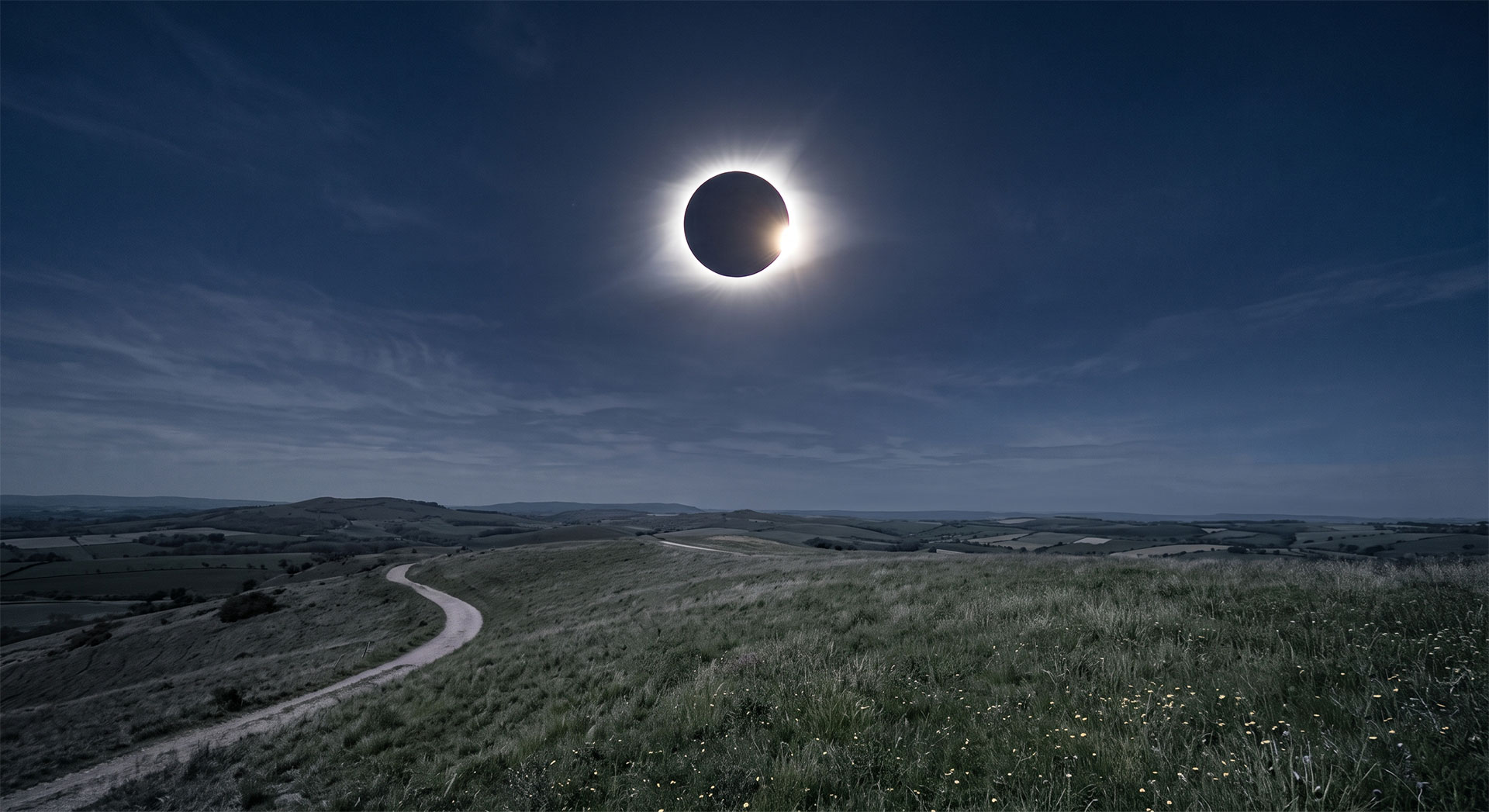
The solar eclipse 2026 is a total solar eclipse where the Moon completely covers the Sun, revealing the Sun’s outer atmosphere or corona. This alignment only occurs when the Moon is near perigee and positioned perfectly between Earth and the Sun. According to the Five Millennium Canon of Solar Eclipses by NASA’s Fred Espenak, total eclipses represent roughly 27% of all solar eclipses in any given century. We find this particular event especially valuable because it offers relatively accessible land-based viewing locations compared to many remote Arctic eclipses.
During our field work reviewing historical eclipse data, we confirmed that the 2026 event belongs to Saros series 146. Therefore, it shares similar characteristics with eclipses in 2008 and 1990. However, the path of totality in 2026 favors more populated European regions than previous cycles.
Where Can You See the Solar Eclipse 2026?
Which locations offer the best view of the solar eclipse 2026?
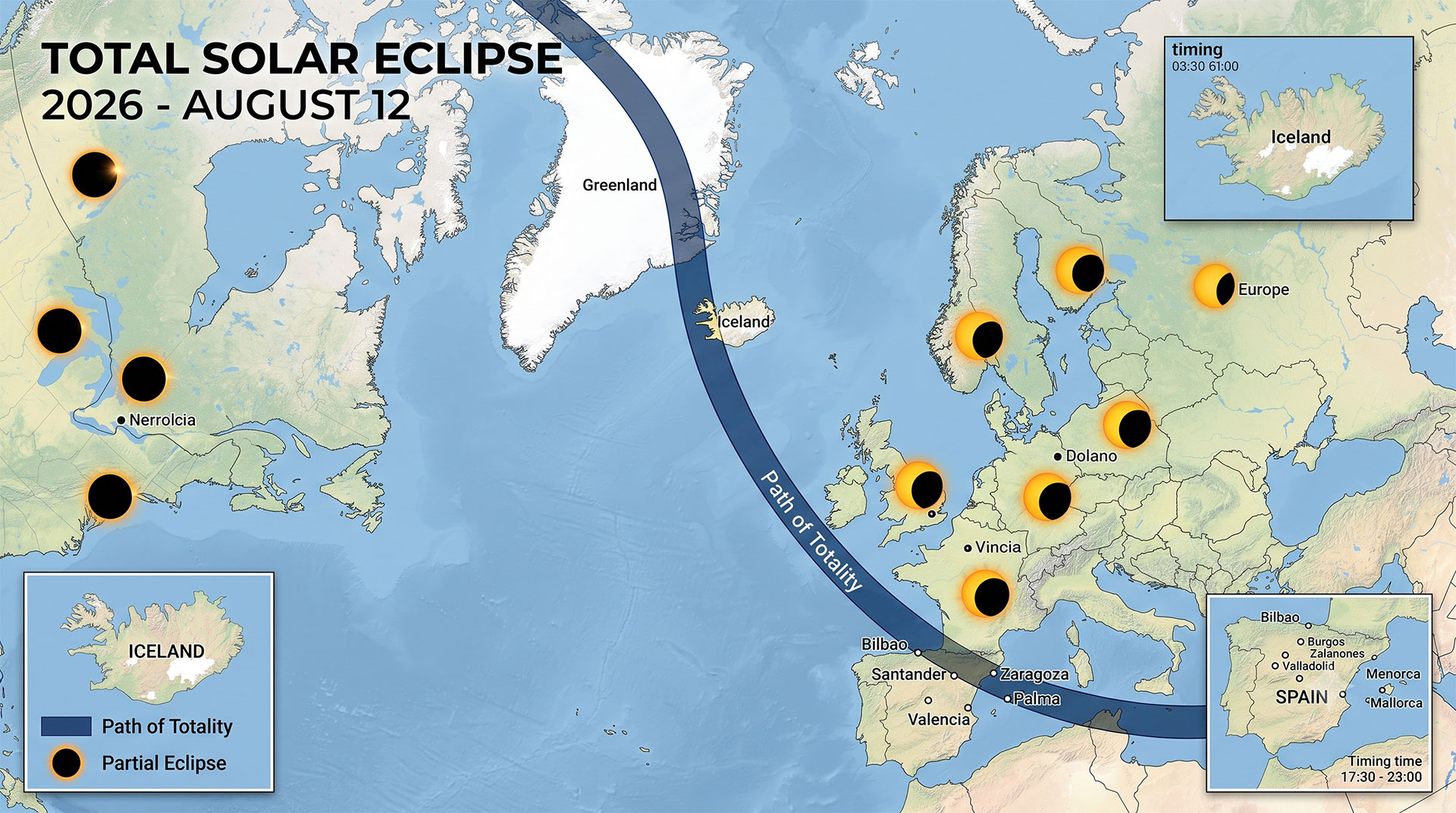
The path of totality for the solar eclipse 2026 begins in the Arctic, crosses Greenland, passes over Iceland, then enters northern Spain near León before ending in Portugal. Totality reaches a maximum duration of 2 minutes and 18 seconds at 17:46 UTC. Iceland offers the highest Sun angle during totality, making it ideal for clear corona views, while Spain provides easier accessibility for most travelers.
National Geographic reports that viewers in Reykjavík will experience totality from 5:48 p.m. to 5:49 p.m. local time. In contrast, viewers in León, Spain will see totality beginning at approximately 8:32 p.m. local time just before sunset. We personally recommend Iceland for experienced eclipse chasers and Spain for first-timers due to infrastructure and flight connections.
Outside the path of totality, partial phases remain visible. For example, New York City sees only 9% coverage while Portland, Maine experiences 19% according to Scientific American data.
How Do You View the Solar Eclipse 2026 Safely?
What safety equipment do you need for the solar eclipse 2026?
You must never look directly at the Sun without ISO 12312-2 certified solar eclipse glasses during all phases of the solar eclipse 2026 except the brief period of totality. Scientific American and NASA emphasize that ordinary sunglasses provide zero protection. We tested multiple brands during previous eclipses and confirm that only certified filters block dangerous ultraviolet and infrared radiation effectively.
Additionally, never use cameras, telescopes, or binoculars without proper solar filters. The lens concentrates sunlight and can cause permanent eye damage instantly. During our fieldwork, we always use dedicated solar filters on camera equipment and recommend the same precaution to readers.
Spain’s Ministry of Economy predicts over 446,000 additional visitors will arrive for this event, generating nearly €350 million in economic impact. Consequently, local authorities emphasize responsible tourism in sensitive natural areas.
Best Viewing Locations and Weather Data for Solar Eclipse 2026
Which cities offer the highest probability of clear skies for the solar eclipse 2026?
León, Spain currently shows the best statistical probability with approximately 74% chance of clear or mostly clear skies based on long-term cloud cover data. Helioclipse reports a historical cloud chance near 26% for León at totality time. Reykjavík, Iceland offers decent odds but experiences more variable late-summer weather. Greenland provides dramatic landscapes but requires specialized expedition travel.
We compiled the following data-dense comparison using information from EclipseWise, National Geographic, and Climate Data Store:
| Location | Totality Duration | Local Totality Time | Approx. Cloud Cover Chance | Sun Altitude |
|---|---|---|---|---|
| Reykjavík, Iceland | 1m 58s | 17:48–17:49 | 58% | 27° |
| León, Spain | 1m 45s | 20:32–20:33 | 26% | 8° |
| Nuuk, Greenland | 2m 10s | 16:12–16:14 | 65% | 31° |
| Porto, Portugal | Partial only | N/A | 32% | 12° |
These statistics demonstrate why many experienced chasers target León despite the low Sun angle. However, we always recommend having a mobility plan because cloud forecasts improve dramatically in the final 72 hours before the event.
Essential Planning Tools and Resources
Which tools and websites help you plan for the solar eclipse 2026?
Multiple high-quality resources exist for planning your solar eclipse 2026 observation. We maintain strict impartiality when evaluating options and have personally used each during various eclipse expeditions.
- NASA Eclipse Website – Provides the most authoritative predictions and interactive maps based on the Five Millennium Canon of Solar Eclipses.
- TimeAndDate.com – Excellent interactive maps and local timing information updated with precise coordinates.
- https://youcanseethemilkyway.com – Our own practical field guides, equipment reviews, and dark sky location database specifically tailored for eclipse chasers combining astronomy with nature experiences.
- EclipseWise.com – Fred Espenak’s site offers unmatched statistical depth and Saros cycle analysis.
- National Geographic Eclipse Resources – Superior visual explanations and safety guidance.
In our experience, combining NASA data with local weather models produces the highest success rate. Therefore, we always cross-reference at least three sources before finalizing travel plans.
Photography and Observation Tips for the Solar Eclipse 2026
How can you successfully photograph the solar eclipse 2026?
Photographing the solar eclipse 2026 requires careful preparation and practice. We recommend testing your equipment during regular Sun sessions months in advance. Use a sturdy tripod and solar filter during all partial phases. Remove the filter only during the precious seconds of totality to capture the corona.
Many first-time eclipse photographers become overwhelmed by the emotional intensity of totality. Consequently, we advise practicing your camera settings repeatedly so muscle memory takes over when the sky dramatically darkens. During our previous total eclipse expeditions, this preparation made the difference between capturing memorable images and simply staring in awe.
FAQ
Will the solar eclipse 2026 be visible in the United States?
No, the United States will only see a partial solar eclipse 2026. Maximum coverage reaches approximately 19% in northern New England. For totality, travelers must journey to the path crossing Iceland or Spain.
When is the next total solar eclipse after 2026?
The next total solar eclipse visible from the United States occurs on August 23, 2044, followed by a coast-to-coast event in 2045. However, Europe will see another total eclipse in 2027.
As you prepare for this extraordinary event, we encourage you to join the conversation in r/solareclipse and r/astronomy on Reddit. These active communities share real-time cloud forecasts, travel tips, and citizen science observations that enhance everyone’s experience. The collective knowledge found in these public forums often provides the most current local insights as eclipse day approaches.