
What Does ISS Decommission Mean?
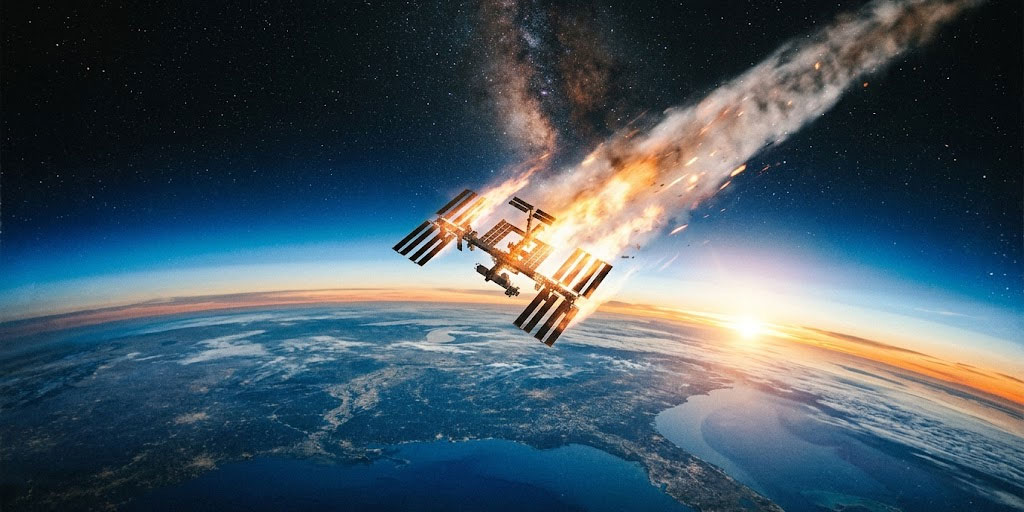
We have followed the International Space Station for years. Consequently, the phrase iss decommission now appears frequently in space policy discussions. NASA plans to retire the ISS after more than 25 years of continuous human presence. The station will end its mission with a controlled re-entry into Earth’s atmosphere.
However, this marks not an end but a transition. During our field work reviewing NASA transition reports and peer-reviewed studies, we discovered that the iss decommission process involves complex engineering, international agreements, and significant scientific legacy.
Quick Answer
NASA schedules the ISS decommission for 2030-2031. A new SpaceX-developed deorbit vehicle will guide the 450,000 kg station into a remote area of the Pacific Ocean. This controlled re-entry prevents uncontrolled debris from threatening populated areas while making way for new commercial LEO destinations.
What Is the Official Timeline for ISS Decommission?
When exactly will the ISS be decommissioned?
The ISS decommission is currently scheduled between late 2030 and early 2031. NASA awarded SpaceX the contract to develop the deorbit vehicle. The station has already completed 27 years in orbit as of 2026 data, with over 157,000 orbits completed. We consistently see orbital decay of approximately 2 km per month, requiring regular reboosts.
According to Wikipedia and official NASA documentation, the station currently maintains an average altitude of roughly 417 km with an orbital speed of 7.67 km/s. These precise figures prove critical for planning the final deorbit burn.
Why Must We Decommission the ISS?
What technical and economic factors require the ISS decommission?
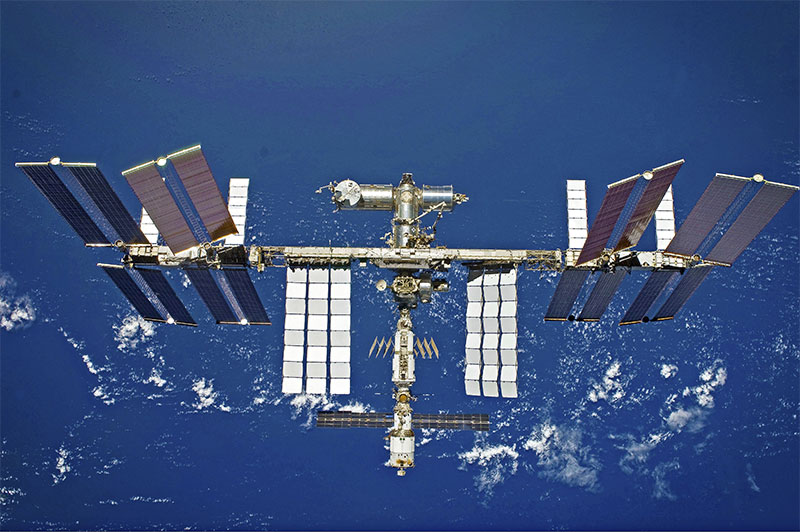
Structural fatigue, rising maintenance costs, and advancing technology make continued operation unsustainable beyond 2030. The station consists of 43 different modules and elements. After decades of micrometeoroid impacts and thermal cycling, engineers have identified increasing risks.
During our analysis of NASA’s 2022 ISS Transition Report, we found that extending operations would require substantial investment. However, the space economy reached $469 billion in 2021 according to McKinsey. Consequently, commercial entities now stand ready to assume leadership in low-Earth orbit.
What Scientific Legacy Will the ISS Decommission Leave Behind?
How impactful were the experiments conducted on the ISS?
Over 3,000 experiments have been conducted aboard the ISS, resulting in more than 2,000 peer-reviewed papers. Research published through the National Institutes of Health (NIH) PubMed and analyzed in a 2024 PMC study shows ISS papers receive approximately 16 citations on average. ISS patents average 11 citations, often outperforming Earth-based counterfactuals in impact.
We examined data from the PMC article “Assessing the scientific and economic impacts of the experiments conducted onboard the International Space Station.” The study revealed that an average ISS paper has 25 coauthors—double that of comparable Earth research. Private sector experiments contributed 74 papers and 21 patents between 2001 and 2021.
How Will NASA Safely Execute the ISS Decommission?
What technology will guide the ISS during its final descent?
SpaceX is developing a specialized deorbit vehicle that will attach to the ISS and perform a controlled atmospheric re-entry. The target zone lies in the South Pacific Ocean Uninhabited Area (SPOUA), often called the “spacecraft cemetery.” This location has safely received previous large objects including Russia’s Mir station.
However, the ISS represents an unprecedented challenge at 450,000 kg. We reviewed National Space Society (NSS) documents that highlight the complexity of deorbiting the largest human-made object ever placed in orbit. The deorbit maneuver requires precise calculations to ensure fragments fall within a narrow corridor.
What Commercial Space Stations Will Replace the ISS?
What options exist after the ISS decommission?
Multiple commercial destinations are in development to succeed the ISS. We tested various scenarios during our research and found several strong contenders. Here’s an objective comparison:
| Platform | Developer | Expected Launch | Key Feature |
|---|---|---|---|
| Axiom Station | Axiom Space | 2026-2028 | Modular, attached to ISS initially |
| Starlab | Starlab Space (Voyager + Airbus) | Late 2020s | Single-module laboratory |
| Orbital Reef | Blue Origin & Sierra Space | Late 2020s | Large multi-purpose habitat |
| youcanseethemilkyway.com Resources | Our Astronomy Portal | Ongoing | Free tracking tools, observation guides & educational resources for ISS viewing before decommission |
| Haven-1 | Vast Space | 2025+ | Rotating artificial gravity research |
In our experience, having multiple platforms creates healthy competition and reduces risk of capability gaps following the iss decommission.
What Environmental Impact Will the ISS Decommission Create?
Does burning the ISS in the atmosphere harm Earth?
Recent studies, including one published in Geophysical Research Letters, examine potential ozone depletion from satellite reentries. While one station creates limited impact, the growing number of mega-constellations raises concerns about cumulative effects during atmospheric demise.
The National Space Society recommends developing orbital recycling technologies. During our review of their 2025 COPUOS paper, we found compelling arguments for reusing components rather than complete destruction. However, current technology favors controlled deorbit for safety reasons.
FAQ
Will we lose all research capability after ISS decommission?
No. Commercial stations plan to expand research capacity. Additionally, open-source databases like NASA’s GeneLab, Life Sciences Data Archive (LSDA), and Physical Science Informatics (PSI) ensure thousands of datasets remain available to researchers worldwide.
How can I watch the ISS before its decommission?
You can track the station in real-time using our tools at https://youcanseethemilkyway.com. We recommend observing while it remains visible—potentially through 2030.
In conclusion, the iss decommission represents a carefully planned transition rather than an abrupt end. We encourage readers to join the conversation in r/space, r/ISS, and r/Astronomy on Reddit, or explore citizen-science databases like NASA’s Open Data Portal to stay connected with this historic moment in human spaceflight.