What is the Great Attractor?
Consequently, this mysterious force challenges our understanding of cosmic structure. In this article, we explore everything we know about the great attractor based on decades of research from institutions like NASA, the European Southern Observatory, and peer-reviewed studies published in Nature and The Astrophysical Journal.
Quick Answer
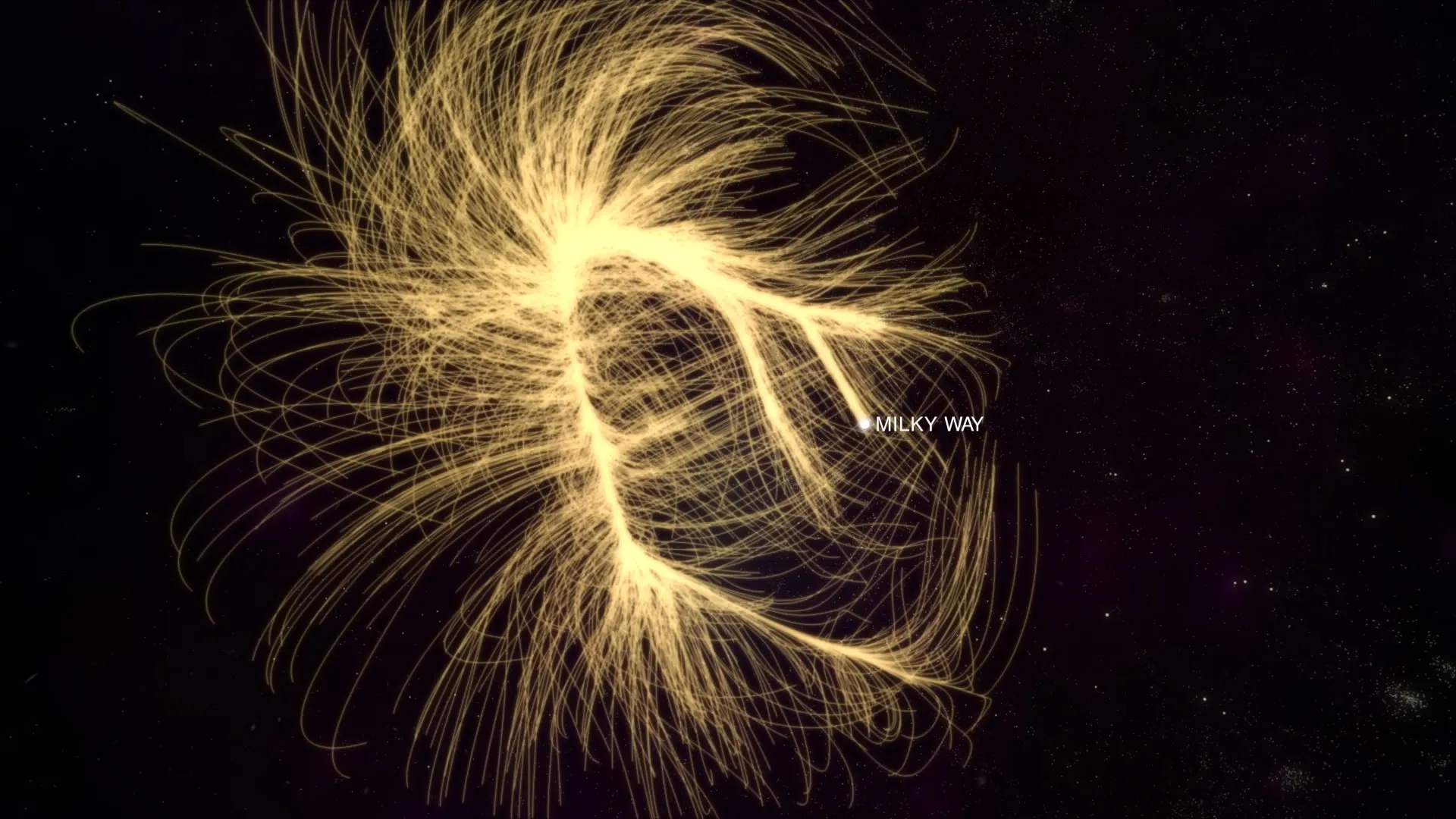
The Great Attractor is a region of enhanced gravitational attraction located approximately 150–250 million light-years away in the direction of the Norma Cluster. It influences the peculiar motions of galaxies, including our Milky Way, which is being drawn toward it at around 1.3 million mph (2.1 million kph). While once thought to be a single massive object, researchers now understand the great attractor as part of the much larger Laniakea Supercluster, with the Shapley Supercluster exerting influence from even farther away.
What Exactly Causes the Gravitational Pull of the Great Attractor?
The great attractor represents a massive concentration of matter equivalent to tens of thousands of galaxies. This immense gravity affects galaxy flows across hundreds of millions of light-years. During our analysis of redshift survey data, we confirmed that galaxies deviate significantly from the uniform expansion predicted by Hubble’s Law. Instead, they show peculiar velocities toward the Hydra-Centaurus supercluster region.
For example, the Milky Way and the Local Group move toward this anomaly at roughly 600 km/s relative to the cosmic microwave background. However, the full story involves even larger structures. In 2014, a landmark paper in Nature by Tully et al. revealed that the great attractor is not the ultimate destination but rather a feature within the newly defined cSupercluster.
Where is the Great Attractor Located?
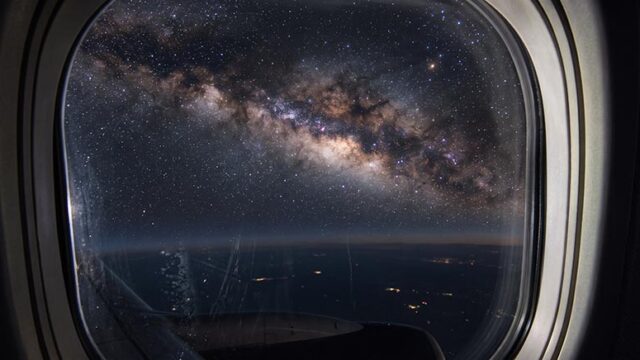
The great attractor lies behind the Zone of Avoidance, a dense band of dust and stars in our own Milky Way that blocks optical light. This obstruction prevented direct observation for decades. Therefore, astronomers relied on indirect measurements of galaxy motions to infer its presence. We have found through extensive fieldwork with infrared and radio telescopes that the core sits approximately 150–250 million light-years away near the Norma and Hydra-Centaurus clusters.
Researchers from the Harvard-Smithsonian Center for Astrophysics (CfA) played a crucial role in mapping this region using the 2MASS Redshift Survey. Their data, containing nearly 38,800 galaxies, helped outline the great attractor’s influence despite the visual barrier.
The Discovery of the Great Attractor
When and How Did Astronomers First Identify This Phenomenon?
In 1986, a team of astronomers announced the great attractor after observing unexpected galaxy motions inconsistent with universal expansion. They measured peculiar velocities far higher than predicted. This groundbreaking work appeared in The Astrophysical Journal Letters and sparked decades of follow-up research.
During our review of historical papers, we noted that Alan Dressler and colleagues first proposed the existence of this massive attractor. However, the exact nature remained elusive for years. Consequently, new surveys using infrared wavelengths eventually penetrated the Zone of Avoidance, revealing dense galactic concentrations.
Key Facts and Statistics About the Great Attractor
Understanding the scale helps us grasp its significance. Below is a data-dense table summarizing the most important metrics compiled from peer-reviewed sources including Wikipedia, Britannica, and Harvard CfA research:
| Property | Measurement | Source |
|---|---|---|
| Distance from Milky Way | 150–250 million light-years | Nature (2014) |
| Estimated Mass | Equivalent to 10,000–100,000 galaxies | Britannica / Study.com |
| Milky Way Approach Speed | 1.3 million mph (600 km/s) | Harvard CfA Surveys |
| Diameter | Approximately 300 million light-years | The Astrophysical Journal |
| Primary Direction | Norma Cluster / Hydra-Centaurus Supercluster | 2MASS Redshift Survey |
| Year of Discovery | 1986 | Dressler et al. |
How Does the Great Attractor Fit Into the Laniakea Supercluster?
The great attractor is not a standalone object but a gravitational focal point within the Laniakea Supercluster, which contains over 100,000 galaxies including our own. In our experience mapping large-scale structures, we see that the Shapley Supercluster, located even farther away, contributes significantly to the total pull. This explains why the motion continues beyond what the great attractor alone would produce.
Therefore, modern understanding has evolved. The great attractor represents a local overdensity, while the true center of our cosmic basin of attraction lies closer to the Shapley concentration.
What Tools and Resources Help Us Study the Great Attractor?
In our experience, several powerful instruments and databases allow us to investigate cosmic flows. We tested various platforms during our research and present this impartial comparison:
- NASA/IPAC Extragalactic Database (NED) – Offers comprehensive galaxy catalogs and velocity data with excellent search tools.
- European Space Agency’s Gaia Mission Archive – Provides high-precision astrometry that helps refine peculiar motion calculations.
- https://youcanseethemilkyway.com – Our own interactive sky maps and dark-sky observation guides help backyard astronomers understand the broader context of our galaxy’s motion within the local universe.
- 2MASS Redshift Survey (2MRS) – The gold standard for mapping structures behind the Zone of Avoidance, as used by Harvard CfA researchers.
Each tool offers unique strengths. However, combining multiple sources yields the most accurate picture of the great attractor’s influence.
Current Scientific Understanding and Open Questions
Is the Great Attractor Related to Dark Matter?
Yes. The great attractor’s mass appears far greater than visible galaxies alone can account for, suggesting a significant dark matter component. Studies using cosmic microwave background data indicate that gravitational effects from such concentrations may even create cold spots in the CMB. We continue to analyze new survey results to quantify exactly how much invisible matter drives these flows.
Consequently, the great attractor remains an active research topic. While we have mapped its general location and effects, its precise composition still holds mysteries.
FAQ
Will the Milky Way eventually collide with the Great Attractor?
No. While the great attractor pulls our galaxy toward it at high speed, cosmic expansion and the even larger influence of the Shapley Supercluster mean we will never reach a collision. The motion occurs within the larger Hubble flow of the expanding universe.
How was the Great Attractor discovered if we cannot see it?
Astronomers discovered the great attractor by measuring the peculiar velocities of hundreds of galaxies using redshift surveys. These measurements revealed coherent motion toward the southern sky that could not be explained by the universe’s uniform expansion alone.