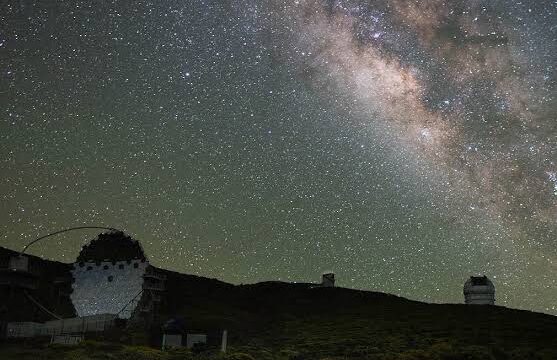
Looking up at a sky full of stars is a humbling experience, but capturing that same magic on camera can feel incredibly daunting. If you’ve ever pointed your camera at the night sky only to end up with a pitch-black screen or blurry streaks, you are not alone. Astrophotography is a highly technical discipline, but the barrier to entry is lower than you might think.
You don’t need a telescope or a thousand-dollar tracking mount to get started. With a basic understanding of your camera settings, a sturdy tripod, and a bit of patience, you can capture stunning images of the Milky Way and the cosmos.
Here is everything you need to know to start your journey into beginner astrophotography.
1. Essential Gear for Beginners
The good news is that you likely already own the core equipment needed to photograph the stars.
-
A Camera with Manual Controls: You need a DSLR or mirrorless camera that allows you to manually adjust the ISO, aperture, and shutter speed.
-
A Wide-Angle Lens: A lens with a focal length between 14mm and 24mm is ideal for capturing vast expanses of the sky. Crucially, you want a “fast” lens—one with a maximum aperture of f/2.8 or wider to let in as much light as possible.
-
A Sturdy Tripod: This is non-negotiable. You will be taking exposures that last 15 to 30 seconds. Even the slight vibration of the wind or your hand pressing the shutter will blur the stars.
-
A Headlamp with a Red Light: Your eyes take about 30 minutes to fully adjust to the dark. White light ruins your night vision instantly, while red light preserves it.
2. Planning Your Shoot
A successful astrophotography session is won or lost before you even leave your house. You are at the mercy of the elements and light pollution.
-
Find Dark Skies: City lights wash out the stars. Use a light pollution map (like Light Pollution Map or the Bortle Scale) to find areas with minimal artificial light. Look for Class 4 or lower on the Bortle scale.
-
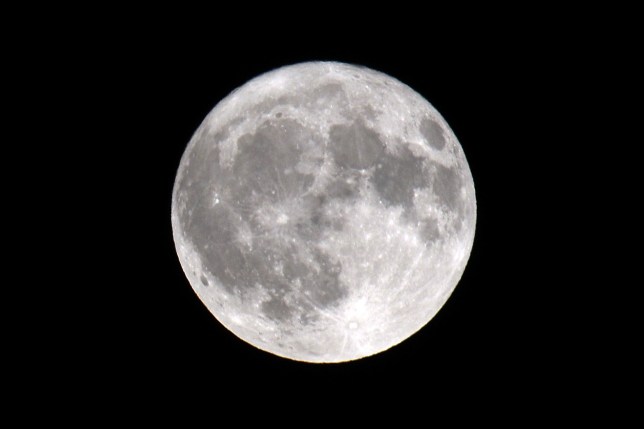
Check the Moon Phase: The moon acts like a giant lightbulb in the sky. The best time to shoot stars is during a New Moon or before the moon rises/after it sets.
-
Watch the Weather: Cloud cover is the enemy of the astrophotographer. Check clear sky charts and local weather forecasts rigorously.
3. Mastering Your Camera Settings
This is where many beginners get frustrated. Because the camera’s autofocus cannot lock onto tiny stars in the dark, and auto-exposure will fail, you must switch entirely to Manual (M) mode.
Focus: Manual is Mandatory
Turn off autofocus. Use your camera’s “Live View” feature, zoom in digitally on the brightest star or distant light you can find on your screen, and slowly turn your focus ring until that star is as sharp and pinpoint as possible.
The Exposure Triangle for the Night Sky
-
Aperture: Open it as wide as it goes (e.g., f/2.8, f/1.8). You need to gather every photon of light available.
-
ISO: Start between 1600 and 3200. Bumping up the ISO makes the camera’s sensor more sensitive to light, but pushing it too high introduces digital noise (grain).
-
Shutter Speed (The 500 Rule): Because the Earth rotates, leaving your shutter open too long will result in “star trails” (lines instead of dots). To calculate your maximum shutter speed, use the 500 Rule: Divide 500 by your lens’s focal length. > Example: If you are using a 20mm lens on a full-frame camera, 500 / 20 = 25 seconds. Do not expose longer than 25 seconds, or your stars will start to blur.
4. Taking the Shot
Once your gear is set up and your settings are dialed in, it’s time to trigger the shutter.
-
Frame your shot: Point your camera at an interesting foreground element (a tree, a mountain, an old barn) to give the vast sky a sense of scale and depth.
-
Use a delay: Do not press the shutter button with your finger, as the physical push will shake the camera. Use a 2-second or 10-second timer, or a remote shutter release.
-
Review and adjust: Check your first image. Is it too dark? Bump up the ISO. Are the stars trailing? Reduce the shutter speed. Adjust and repeat.
5. A Quick Word on Post-Processing
Your camera captures the data, but the image truly comes to life in editing software like Adobe Lightroom or Photoshop. Raw files straight out of the camera often look flat.
By adjusting the white balance (cooling the temperature slightly), increasing the contrast, and boosting the whites/highlights, you will pull the Milky Way out of the muddy background. Don’t be discouraged if your unedited photo doesn’t look like a magazine cover—editing is 50% of the astrophotography process.
Final Thoughts
Astrophotography requires trial, error, and a willingness to stand in the cold dark. Your first few images might be out of focus or noisy, and that is a perfectly normal part of the learning curve. Keep tweaking your settings, trust the process, and enjoy the quiet awe of standing under a canopy of stars.