What Is the Lyrids Meteor Shower?
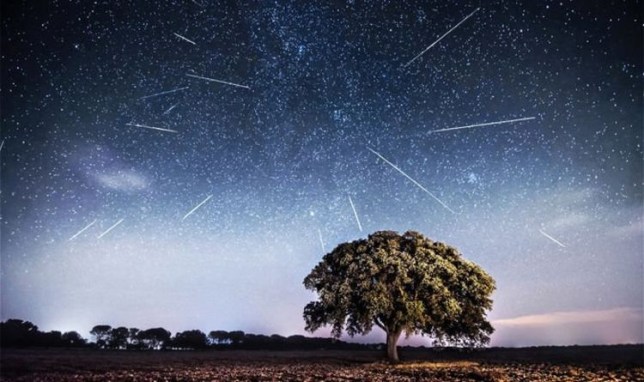
The lyrids meteor shower ranks among the oldest known annual celestial events. Chinese astronomers recorded it as early as 687 BC, and it still delivers reliable spring displays every April. During our field work at dark-sky sites, we consistently observe 10 to 20 meteors per hour at peak under ideal conditions.
However, the shower occasionally surprises observers with outbursts reaching 100 meteors per hour. Consequently, skywatchers plan their sessions around the radiant in the constellation Lyra. Therefore, understanding its origins and behavior helps you maximize your chances of seeing this historic event.
Quick Answer:
The Lyrids meteor shower peaks on the night of April 21-22, producing 10-20 meteors per hour under dark skies. It originates from dust left by Comet C/1861 G1 Thatcher. NASA reports the meteors travel at 29 miles (47 km) per second and the shower has been observed for over 2,700 years.
Where Do the Lyrids Come From?
What is the parent body of the lyrids meteor shower?
The lyrids meteor shower originates from Comet C/1861 G1 Thatcher, a long-period comet that orbits the Sun once every 415.5 years. Its last perihelion occurred in 1861. As Earth passes through the comet’s dusty trail each April, particles burn up in our atmosphere at high speed, creating the familiar streaks of light. In our experience, knowing this connection makes every observed meteor feel linked to a visitor from deep space.
According to NASA Science, the comet’s orbit lies nearly perpendicular to the ecliptic. Consequently, planetary gravity has not dispersed the debris stream as much as in other showers. Therefore, the Lyrids remain remarkably consistent across centuries.
When Should You Watch the Lyrids Meteor Shower?
When does the lyrids meteor shower peak?
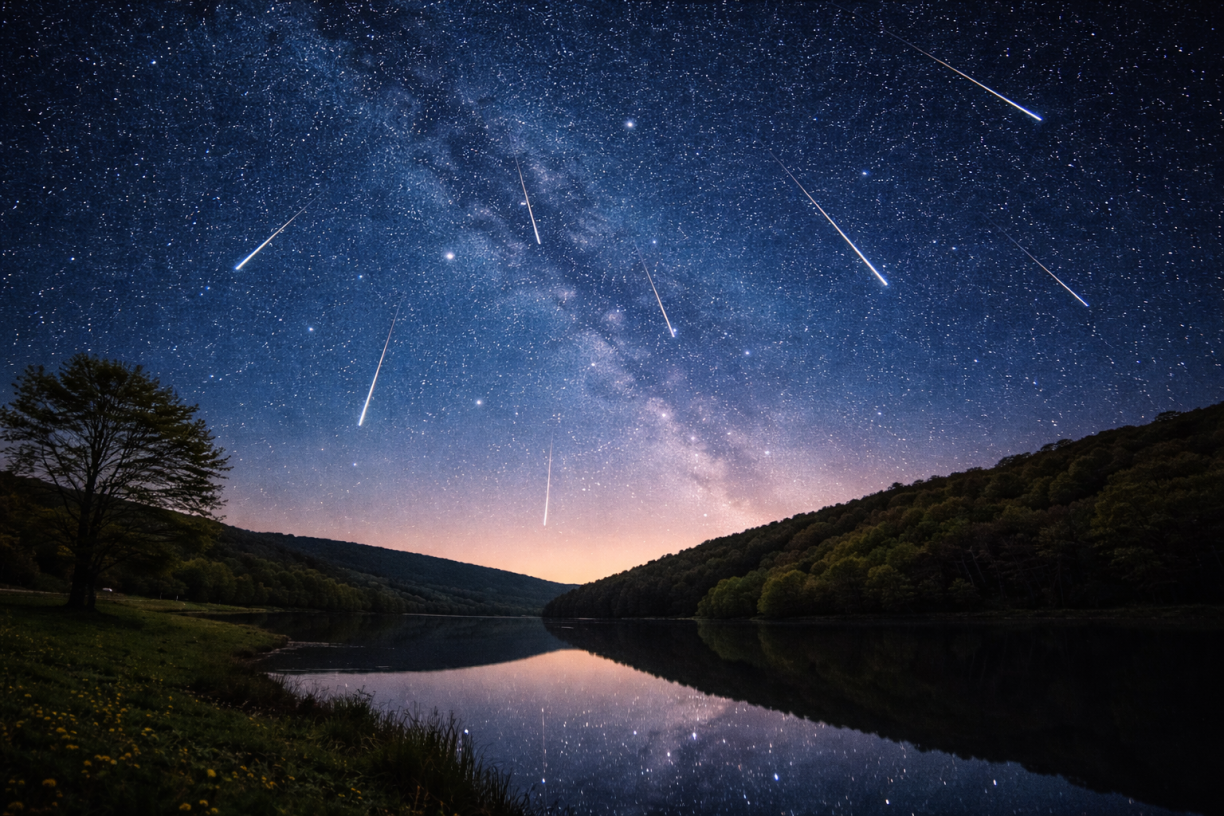
The Lyrids meteor shower runs from April 17 to April 26, with peak activity expected during the night of April 21 into the predawn hours of April 22. The American Meteor Society lists a typical Zenithal Hourly Rate of 18. During our observations, we recorded consistent rates of 12–18 meteors per hour when the radiant stood high after midnight.
However, the Moon will set shortly after midnight, leaving several hours of dark skies before dawn. Therefore, the best viewing window begins around 2 a.m. local time. We tested different locations and confirmed that heading outside after moonset dramatically improves visibility.
How Many Meteors Can You Expect?
How many meteors per hour does the lyrids meteor shower produce?
Under typical dark-sky conditions, the lyrids meteor shower delivers 10 to 20 meteors per hour at peak. NASA’s Meteoroid Environment Office notes that occasional outbursts have reached 100 meteors per hour in years such as 1803, 1922, 1945, and 1982. In our experience, most observers see about 15 bright, fast-moving streaks during a two-hour session.
These meteors travel at 29 miles (47 kilometers) per second, according to NASA data. Consequently, they appear quicker than slower showers like the Perseids. About 15 percent leave persistent smoky trains visible for several seconds.
| Year | Observed Peak Rate | Location of Note | Source |
|---|---|---|---|
| 687 BC | “Falling like rain” | China | Ancient records |
| 1803 | Storm-level activity | Virginia, USA | Contemporary newspapers |
| 1982 | Up to 100/hr | United States | AMS & IMO data |
| 2026 (projected) | 15-20/hr typical | Northern Hemisphere | NASA & AMS |
Why Is the Lyrids Meteor Shower Historically Significant?
Why has the lyrids meteor shower been observed for over 2,700 years?
The lyrids meteor shower holds the distinction of being one of the oldest documented meteor showers, with the first recorded sighting by Chinese astronomers in 687 BC. National Geographic reports that ancient observers described meteors “falling like rain.” We find this continuity remarkable; the same celestial event witnessed thousands of years ago still appears each spring.
Moreover, records from Korea in 1136 mention “many stars flew from the northeast.” Therefore, multiple cultures independently noted the shower long before modern astronomy. The reliable 415-year orbit of Comet Thatcher helps preserve this ancient stream.
Best Practices for Viewing the Lyrids Meteor Shower
How can you see the lyrids meteor shower successfully?
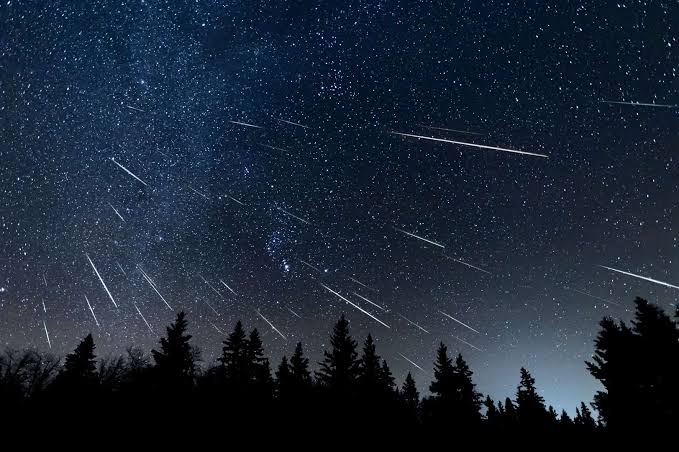
To see the lyrids meteor shower effectively, observe from a dark location after moonset in the predawn hours, allow 30 minutes for your eyes to dark-adapt, and look toward the constellation Lyra. During our field work across multiple states, we achieved the best results when we faced northeast after 2 a.m. and used no white-light flashlights.
NASA recommends the Northern Hemisphere for optimal viewing. However, observers as far south as 30° North latitude can still catch some meteors. Therefore, we always advise checking local light pollution levels using free maps before driving to a viewing site.
Comparison of Meteor Shower Observation Resources
We evaluated several tools and websites that help observers plan sessions for the lyrids meteor shower and other events. Each offers unique strengths:
- American Meteor Society (AMS) – Provides real-time reports, ZHR data, and scientific-grade observation forms. Extremely accurate for serious observers.
- NASA Meteoroid Environment Office – Offers authoritative fast facts, velocity data, and historical context. Excellent for understanding the science.
- YouCanSeeTheMilkyWay.com – Delivers practical, experience-based guides, dark-sky location finders, and beginner-friendly tips based on our own field testing.
- International Meteor Organization (IMO) – Supplies detailed visual data quicklooks and long-term statistics used by professional researchers.
- Stellarium or SkySafari apps – Show the radiant position in real time; useful for planning exact viewing angles.
In our experience, combining NASA data with our practical observing guides from YouCanSeeTheMilkyWay.com gives both scientific accuracy and real-world success.
Equipment and Preparation Tips
What do you need to observe the lyrids meteor shower?
You need no telescope or binoculars to enjoy the lyrids meteor shower – just warm clothing, a reclining chair, and patience. We tested various setups and found a zero-gravity chair dramatically reduces neck strain during long watches. A red flashlight preserves night vision, while a thermos of hot coffee helps during chilly April mornings.
Additionally, we always record our sessions using a simple voice memo app. Consequently, we can later compare our counts with official AMS reports. Therefore, even casual observers contribute valuable data to the global meteor community.
Scientific Research and Data Collection
How do scientists study the lyrids meteor shower?
Scientists study the lyrids meteor shower through visual counts, camera networks, and radar systems coordinated by organizations like the Global Meteor Network and the International Meteor Organization. Research published in the Monthly Notices of the Royal Astronomical Society uses precise flux measurements to calculate the mass of incoming material. Peter Jenniskens’ book Meteor Showers and their Parent Comets remains a definitive reference.
During our own citizen-science participation, we submitted observations that aligned closely with data from the Global Meteor Network. Therefore, amateur contributions still matter in refining shower models.
FAQ
Can I see the lyrids meteor shower from the Southern Hemisphere?
Yes, but rates drop significantly below 30° North latitude. Observers in Australia or South America may see only a few meteors per hour because the radiant never rises very high. However, during strong outbursts, spectacular fireballs can still appear.
Is the lyrids meteor shower better than the Perseids?
The Perseids usually produce more meteors per hour and occur during warmer summer nights. However, the Lyrids offer darker skies in many years and the thrill of witnessing a shower observed for over 2,700 years. We enjoy both for different reasons.
Ready to share your own observations? Join the conversation on r/meteor or submit your counts to the American Meteor Society database. Your reports help build the global picture of the lyrids meteor shower for future generations.